Showing posts with label Edmonton City Council. Show all posts

Tuesday, October 19, 2010

Alberta municipal elections review

CALGARY MAYOR

Calgary mayor-elect Naheed Nenshi has said he was interviewed by "the evangelical newspaper." Whatever Nenshi was referring to, his remarks - punctuated by giggles -suggest someone who sees evangelicals as an oddity to be humored. I doubt that his rendering of the questions that were put to him were word-for-word accurate; Nenshi's account is extremely plausible for a non-evangelical imagining what evangelicals are like, which is, in fact, what's somewhat concerning for an evangelical. The attitude seems to be, everyone is entitled to their place in the freak show: "they're people too;" evangelicals may be deviants, but let's not marginalize them any more than, say, the cross-dressing community because we're all God's, or Allah's, children.

A harsh hostility to secularism and "diversity" is, of course, not the only alternative to Nenshi's attitude. Instead of just promulgating Nenshi's facile "I'm everybody positive" line, one could try to acquire a knowledge level of the "Other" that approaches that of an "insider" such that one could say, for example, one was interviewed by someone with the Evangelical Fellowship of Canada, or Focus on the Family Canada, or whoever it actually was as opposed to some depersonalized one of them. Fact is, a politician whose language suggested he or she had, for example, read the Purpose Driven Life (by pastor Rick Warren) would receive a lot more evangelical interest even if he or she said, "I don't agree with Rick Warren with respect to X and Y," than a politician like Nenshi, who, being agreeable, might say he agrees with someone like Warren but would never bring up Warren by name since the whole evangelical culture is terra incognita to him.

The situation south of the border is rather different. The PBS documentary God in America is not titled "God in North America." The race for the US Senate seat up for grabs in Kentucky got some increased national attention recently when Democrat Jack Conway (left in photo at right) attacked Tea Party-endorsed Rand Paul (right at right) for his youthful anti-Christian libertarianism in a TV advertisement Jon Chait called the "ugliest political ad of the year." Liberal pundits have jumped at the chance to follow Chait in condemning Conway, since it provides an opportunity to burnish their credentials as independent of the Democratic party. I have to agree with Harvard academic Theda Skocpol that the ad is nonetheless fair game. One would think with all the ads out there that fail basic fact checks, an ad that appears to be accurate with respect to its salient point would not be topping the list for most unacceptable. The Republican establishment advised James Dobson that Paul was a libertarian but Paul's people lobbied Dobson hard to change his endorsement from the GOP establishment candidate to Paul and were successful. Had Paul not done this and even accused his primary competitor of misleading Dobson, Paul's blasphemous college pranks - which Dobson would have taken very seriously had he known - would not be an issue. Ugly might thus better describe Rand's reaction: calling for Conway to be disqualified from standing for election and pandering by substituting the substantive knowledge I suggest above with a "pop culture" quote from scripture.

All this to say that Nenshi's election is indeed contrary to the stereotype of Calgary as Harperite heartland but Calgarians do not demand social conservatism out of their politicians like voters in the US South do. Albertans are not especially fiscally conservative either. Alberta has a far larger government than its personal and corporate tax revenues could possibly support. As MLA Doug Griffiths as pointed out, those revenues wouldn't even cover the Health budget, which is but one department. The province nonetheless enjoys a windfall of natural resource revenues that has fueled government expansion. It's true that "Conservative" candidates win easily across the province (aside from central Edmonton) at the federal level. But this is in large part due to regional alienation sentiments (and a taste for "patriotic" foreign policy that doesn't apply sub-nationally) that cannot be so easily inflamed at the provincial level, and even less so at the municipal level. So it is that candidates who would be "Liberal" provincially and/or federally routinely beat "Conservative" candidates in both Edmonton and Calgary municipal elections.

Nenshi's Masters in Public Policy from Harvard helps him in a race where the electorate is voting for an individual instead of a party, as it should, since the status of high school drop-out that one particularly famous former Calgary mayor held is not especially salutory when Alberta already has one of the highest dropout rates in the country. I should also acknowledge that I would have few Nenshi conversations to take issue with were Nenshi not open enough to not object to a guy following him around with a camera and releasing footage under a minimally restrictive Creative Commons license. While there appears to be some Obama-like hype around Nenshi, it is presently too early to dismiss Nenshi's election a "mistake," as Calgary government MLA Kyle Fawcett tweeted. The way Nenshi won, from relative obscurity to victory in just a few weeks despite not having held office before, should encourage quality candidates to get involved in municipal politics.

EDMONTON CITY COUNCIL

Paula Simons of the Edmonton Journal has, unsurprisingly, interpreted the re-election of Stephen Mandel (right) and the likes of Don Iveson as meaning the capital city has overcome its "fear of innovation" amongst other things. For someone who has supposedly been liberated to innovate, Simons' analysis is distinguished by its lack of originality. A continued small-l liberal conceit is that conservative finger-wagging about "responsibility" is ultimately reducible to a fear of moving forward. One of David Dorward's (at left, photo credit Ed Kaiser, Edm J) campaign themes was getting the funding for a massive LRT expansion well sorted before jumping into deficit financing and/or years of double-digit tax increases. This point is rather conveniently avoided by the thesis that the municipal vote is reducible to a referendum on the airport or some pie-in-the-sky notion of "how we see ourselves as a city." It's as if only narrow and small-minded people talk about prosaic details like the number of calories in a veggie plate relative to a chocolate sundae. "Think big" ergo "spend big," - tomorrow will take care itself if you see the glass as half full. At bottom it's the same tax-and-spend (non-)argument we've heard for years.

Graham Thomson, meanwhile, uses his column to draw a line from the municipal election to a future provincial crackdown on "freedom of the press." His logic
- the Wildrose Alliance supported Dorward for mayor
- Danielle Smith, Wildrose leader, is running in Okotoks-High River
- William "Bible Bill" Aberhart represented this area in the 1930s
- as premier, Aberhart tried to censor the press and was a hypocrite with respect to MLA recall.
That Thomson should manage to get this absurdity printed in Edmonton's paper of record is a testimony to his skills at sophistry. Perhaps conscious of the enormous chasms his "reasoning" is leaping, he says "readers took me to task" for not drawing links like this earlier and he's just innocently "making the connection as a reminder that sometimes Alberta politics takes dramatic and unexpected turns." Right.

St Albert pundit David Climenhaga muses about the implications of the "decisive defeat" of David Dorward. In fact had Calgary's mayor-elect received Dorward's 34% of the Edmonton vote, Calgary's mayor-elect would still be mayor-elect. In other words, Dorward beat both Ric McIver and Barb Higgins yet few are saying both of those two Calgary contenders went down to "decisive" defeat. Dorward's result was actually reasonably strong given how late his campaign got going and the fact he was on the minority side of the galvanizing airport issue. Incumbents are re-elected close to 90% of the time, such that had the election been at all close it ought to be interpreted as a wake-up call to the incumbent. On that count, Kim Krushell, the well-regarded Ward 2 incumbent, had such a squeaker of a win that it can hardly be said the airport issue didn't have any traction. This ward 2 race is far more suitable for being characterized as a referendum on the airport than the mayoralty race. Also of interest is the fact that former Alberta Alliance candidate Tony Caterina swamped Brendan van Alstine in Ward 7 despite the fact #toncat was only partially an incumbent and Ward 7 is prime NDP territory. Last, but not least, is Kerry Diotte's success in Ward 11. Perennial "almost but not quite" candidate Chinwe Okelu thought his gap behind Diotte would have been tighter that it ended up being. As someone who had some Wildrose support, Diotte's win is another counterpoint to the contention that the tea leaves of the municipal election suggest the Wildrose Alliance will find no purchase in the capital city.

Monday, September 27, 2010

land value taxation and the ECCA closure debate: oligarchs in the shadows?

In a comment to my last post about land value taxation, Edmonton Journal columnist David Staples asked me a few follow-up questions of the sort that one would one expect from any good journalist. A good journalist is, of course, an invaluable aide to any politician or pundit who has some useful policy ideas but is short on charisma, eloquence, or just ability to speak plainly and concisely, since the journalist can take the idea, add the missing eloquence, concision, and straightforward presentation, and then present the concept to the public for mass consumption. I'd make a few more asides about the relationship between good journalists and politicians who are long on charisma and eloquence and short on policy substance, but that's an extended topic in itself I'll leave for another day.

So without further ado (I've edited or ignored a question or two; the first lesson successful political candidates learn is to not answer the questions they are asked, but rather the questions they prefer to be asked to the extent that it is possible to do so without getting called on the evasion):

You don't tax the building, just the land, is that it? And you tax the land based on what exactly?

Yes, a given plot of land would be taxed the same by the city regardless of whether there was a skyscraper on it or a dilapidated old shack. The tax payable would be determined by the market value of the land. Just how the market value of the land would be determined could be complicated; suffice to say that this paper attempted to do so and concluded that, for example, for the average property transaction in Clareview a decade ago, 35% of the sale price reflected the value of the land.

Who will pay more and who will pay less under this system?

To continue with that 35% example, if I were a property owner and city assessors concluded that, based on a hypothetical sale of my property at market value, more than 35% of the value I would receive would represent land value, I would pay more. A typical owner who would pay more would be the owner of a single detached bungalow, especially if the building was run down. A typical owner who would pay less would be a high rise condo dweller.

How will it drive people to live in the inner city? Examples?

Offered examples are typical hypothetical since the case for land value taxation hasn't been as developed as an empirical argument as much as as a theoretical one.

By far the biggest and most contentious hypothetical example in the Edmonton context is the city centre airport lands. One of the biggest arguments for closure of the ECCA concerns the opportunity cost of not having more dense development there. Under land value taxation, the marginal tax cost of throwing up a residential high rise or commercial skyscraper on what is now a runway would be zero. These buildings will be more competitively priced to potential occupants than, say, a suburban bungalow (the market will capitalize the present value of a bungalow lot's future tax liability into its sale price).

To leave aside these questions to make some observations about the ECCA debate, note that instead of advancing a call for land value taxation, which would support closure of the airport if it were straightforwardly efficient to do so, most of the advocates for closure have instead called for closure by city council decree. For a lot of people like me who are naturally skeptical of centralized government planning, we are suspicious of the numbers arguments that have been trotted out in defence of the decree. Are costs being fully accounted for? Do the pro-airport councilors really want the buildings, or the tax revenue they hope the improvements would generate? Convert the land to high density residential and, yes, at first glance this should obviously generate a lot more tax revenue for the city than the status quo, but absent tax reform the increased revenues are coming from improvements to the land, an elastic source, and whenever elastic sources are taxed dynamic scoring is required. There is a feedback loop, in other words, that makes any definitive analysis quite complex.

Amidst this complexity and uncertainty, questions about how the incumbent council can come to a definitive disinterested conclusion arise. In 1990, for example, many economists wrote to Mikhail Gorbachev, advising him that "[w]hile the governments of developed nations with market economies collect some of the rent of land in taxes, they do not collect nearly as much as they could..." Land value taxation was nonetheless not adopted in the wake of the collapse of the Soviet Union, because it wasn't in the interests of the would-be oligarchs:
...a least distorted way for Russia to recover was by a tax on economic rent, that is, the value of land and natural resources that exists independently of labor and capital investment. The aim is to untax industry and labor, and make Russia's natural resources monopolies finance the government. But these are precisely the assets that Yeltsin's kleptocrats were the first to grab.

Sunday, September 26, 2010

election in E-town: land value taxation vs what's interesting

A blogpost about an election next month in Alberta's capital city may not interest all readers, so I'll first make some observations about policy that would apply to all municipalities before making some snarky remarks about some of the more colourful candidates in Edmonton.

Whereas shifting the tax burden off of investment (most directly, off of business) on to consumption, especially consumption that creates a negative externality (e.g. environmental damage), is the perhaps the most popular policy prescription of economists at the macro level, at the municipal level the call is for land value taxation.

According to Canadian economist and Nobel Prize winner William Vickrey:
removing almost all business taxes, including property taxes on improvements, excepting only taxes reflecting the marginal social cost of public services rendered to specific activities, and replacing them with taxes on site values, would substantially improve the economic efficiency of the jurisdiction.
In other words, aside from tax revenue that can be roughly categorized as user fees, taxes on real estate improvements ("one of the worst taxes", in Vickrey's words) should be minimized in favour of taxes on site value "("one of the best taxes").

Vickrey is not alone here. Others have claimed that
Economic theory and, to a lesser degree, empirical evidence support the claim that taxing land values instead of wages, profits, or capital values would improve economic performance and could improve people’s lives. (p. 10)
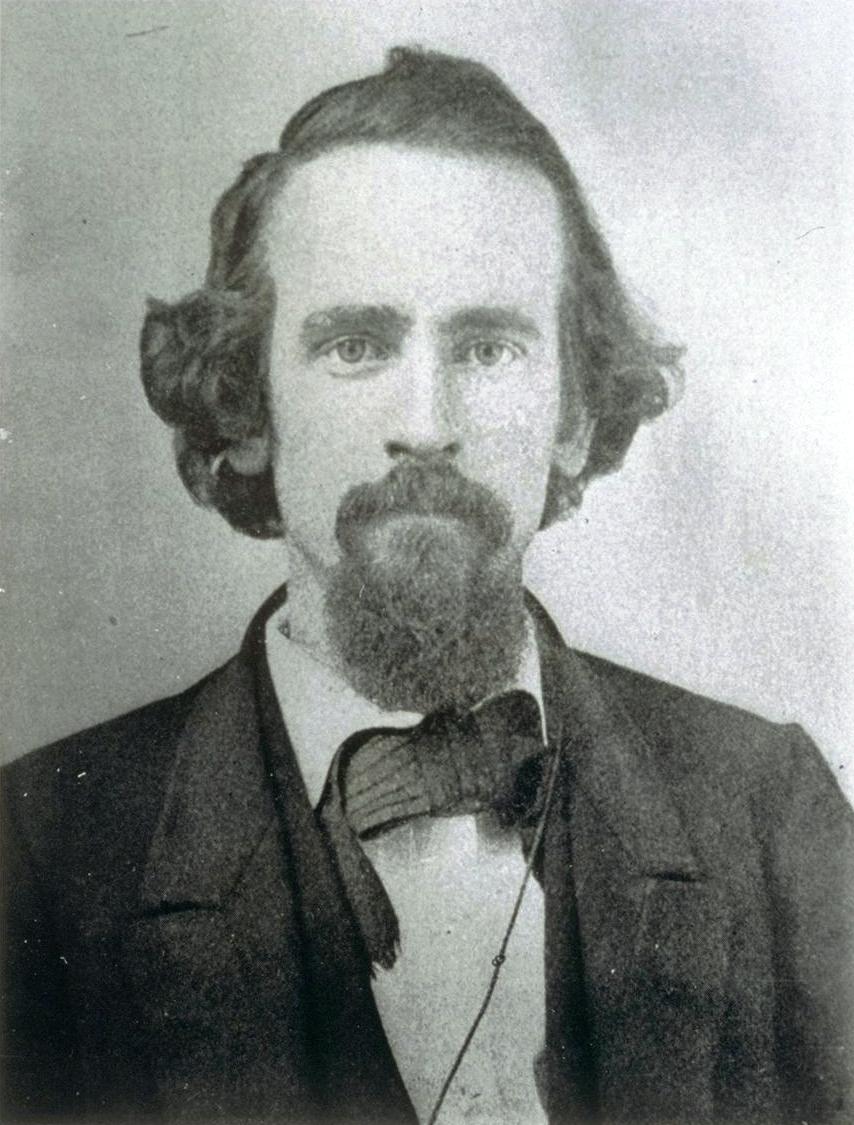
Indeed, 7 other Noble Laureates besides Vickrey have endorsed the idea, although one should be careful about transferring the authority that a Nobel Prize implies in a particular field of economics to another field, case in point being Vickrey's dubious defence of large budget deficits. Vickrey may be a hard-core Keynesian, but on the merits of land value taxation, Milton Friedman agrees with Vickrey: "the least bad tax is the property tax on the unimproved value of land, the Henry George [right] argument of many, many years ago."

Note also that the benefits of a location well served by civic services and public infrastructure will be capitalized into higher land value such that the revenue returned to the government by site value taxation is proportionate to the added economic value generated by its services.

If a land value tax system were implemented, the tax payable of property owners would change according to the proportion of the property's value attributable to land. According to a study of a decade ago titled "Implementing a Land Value Tax in Urban Residential Communities," property sales in the Edmonton neighbourhood of Clareview suggested that, on average, land represented 35% of sale value.

A half-way house towards a shift to a land value tax is split rate taxation, whereby the tax rate on the value of the land is set significantly higher than that on improvements. According to a 2003 study, more than 700 cities around the world use a split-rate property tax system. In North America, however, the land value tax idea has seen little implementation.

Now how does this relate to the election in E-Town on October 18? Money issues are not everything, of course (consider the fact that statistics showed a drop in west-end crime because of the work of volunteers from the Beulah Alliance Church), but taxation does matter and moving to land value taxation would stimulate urban core development while preserving the environment and reducing urban sprawl. The candidates who have talked most loudly about the value of these objectives, however, have typically done the most to undermine them by supporting higher property tax rates, especially on businesses (which include non-owner occupied condos and hotels, which would have amongst the highest building to land value ratios) relative to single family residences (which would have amongst the lowest).

At 1:34 of the video below, you see councilor Don Iveson contending that more spending on transit would encourage more people to move into the city centre, his logic being that more municipal government spending would increase incomes. Why this increased income wouldn't be spent on housing in the 'burbs, or where this additional money for transit is supposed to come from, isn't explained.

What's particularly galling is that in the process of getting on city council, Iveson took out Mike Nickel, the one candidate in recent years to take issue with the prevailing policy that sees businesses pay higher tax rates than individuals.

I'd give Iveson due credit for running a campaign 3 years ago that up-ended an incumbent, but I think that the significance of that campaign has been rather oversold. To begin with, Iveson "lost" to incument Bryan Anderson. It just so happened that at the time a 2nd place finish still got one a seat at the council table. As Alex Abboud has noted, had the new ward system been in place in 2007, Iveson would have lost to Anderson in the new Ward 10 that Iveson is currently running in, and in the more southerly new Ward 9, which constitutes the rest of the bulk of the old ward, Iveson would have finished third (30% Anderson, 28% Nickel, 25% Iveson). The straightforward explanation for why Iveson beat Nickel is that Iveson was ideologically left, Nickel right, and everything north of the Whitemud, and especially north of 61 Ave, between Whitemud Creek Ravine and the river (on the west) and Gateway Blvd (on the east) tilts left, getting even more left as one progresses north to the U of A campus and the river, such that in the far north of the old ward that is now Ward 8, Iveson swamped Nickel 38% to less than 15% (with Anderson taking 27%).

The lesson from this is that in 2010, the only incumbent in any serious danger is Tony Caterina in Ward 7. Whether one looks at provincial voting patterns or federal, it's clear that Caterina, as a former Alberta Alliance candidate, is out of step ideologically with the Alberta Avenue area he is running in, his general reasonableness notwithstanding. Brendan van Alstine has been campaigning for a very long time now, and the Iveson case suggests that whether he fits with the area's ideological lean is quite likely more important than the campaign. Scott McKeen is also running here, and although normally someone who throws his hat in the ring so late in the game is unlikely to win, McKeen might have started fund-raising and door-knocking long ago, with him keeping it on the QT in order to remain the Edmonton Journal's salaried civic affairs reporter for as long as possible.

I'm actually going to be living in Ward 7 until the end of October - I met van Alstine and one of his campaign people when he was out with his dog on 118 Ave Thursday evening - but legally I've remained resident at my parents' place in Clareview for years, such that if I was going to vote it would have to be in Ward 4.

In Ward 4 we've got a Satanist in the candidate mix, which has attracted criticism to such a degree that you'd think he was in league with the Devil or something. The candidate's unforgivable sin is rather his profanation of the Queen's English. Now maybe Mr Robb (photo at right) is correct that "the contraversial closure of the ECCA... will result in huge property tax increases, many deaths, and destruction of a historic site" and maybe he isn't. But what is most certainly not correct is having the first letter of the alphabet represented twice in "controversial." And as for describing the airport closure as "a blantant disregard for democracy," is not the combining of the word "blatant" with "bland" a watering down of the alleged blatancy? Also running in Ward 4 for "city councel" is Ken Atkinson. "Councel" might be more tolerable here if Mr Atkinson hadn't managed to use the dictionary spelling elsewhere on his blog. I mean, you'd think that with two variant spellings, he'd have cause for pause and a bit of a think about which of the two variants he's going to run with.

UPDATE (Sept 27):

In response to a comment this post continues on the matter of land value taxation.

Thursday, August 26, 2010

Wildrose in Edmonton - Rutherford

Wildrose's Edmonton - Rutherford constituency association held a barbecue earlier this Thursday evening and the first thing that struck me was the latest promotional banners. City Council may feel compelled to pass a road safety bylaw banning the use of Danielle's latest promo image near motorways because her look here is traffic stopping. I'd almost think they overdid it, but if newly minted Masschusetts Senator Scott Brown is any guide, a politician can never be too goodlooking.

Before we sat down to eat I chatted with Jim J and Ben B who work for caucus on the 5th floor of the Leg Annex and we got on the subject of municipal politics. I advanced the thesis that most citizens get involved with political campaigns by starting with the federal level, and from there moving on to provincial and finally municipal politics. Ideally, it should be the other way around, because then people would be more issue-focused than ideology-focused and, more importantly, would not as incubated by a "party machine." As it stands now, a lot of the most influential new people in Wildrose want to do things like they are done within a particular federal party, whereas if they had municipal backgrounds they would be coming in with diverse experiences of what worked period.

After Danielle spoke, a comedian/magician took the floor and he was very well received: "Many of you are politically active. Myself, I don't support an organized political party...... I'm a Liberal." The silent auction was another good idea... the "Wildrose surprise box" went for $20 and I never did find out what was in it.

Safetech invited me to join them at their table but the contributions of various businesses were not limited to buying tables. Alberta Pork supplied the main dish and the silent auction contributions of Weiss-Johnson Sheet Metal and Next Flight Courier were substantial. I would advise other constituency associations cultivating their business relationships like this to also take some photos illustrating a good turn-out and of the event display of their product or service information so that this can be emailed back to the business owners/managers as confirmation that their contributions were not just charity but had a business building component consistent with the experience of sponsors of non-political events.

When Danielle took the floor she addressed a number of policy issues and, just as importantly, provided some background. Reading between the lines of her discussion about the background to taking a position on the downtown airport closure, I felt my suspicion confirmed that Danielle was inclined to take a nuanced position on the airport but that Guy Boutilier and Paul Hinman wanted to dive into the issue like Manual Uribe doing a cannonball. Whenever the party appears to be damning the torpedeos, in my view it's usually because some influential players are temperamentally inclined to a "hang 'em high" Tea Party philosophy and Danielle cannot just ignore and defy such people since the party is not just all about her. Of course as far as your correspondent is concerned it ought to be all about her; - although her communications focus is on what I consider to be micro and local issues, she never fails to be convincing in substance and a model of reasonableness in tone. She also projects empathy, in that one could not fail to notice from her body language that she is either very sensitive or has received an earful or two in the past from those who ardently want both the airport and, more to the point, the issue about it closed. A Ron Leipert type she is not.

So when the hostility of the government has been such that they have obstructed caucus staffers from adding Danielle's name to a press release (on the grounds that taxpayer resources paid for the electricity that powered the e-mail carrying the name of a non-MLA), that may have been just as well in this corner's view since the less we hear from caucus and the more we hear from Danielle the better! On that count, I not only applaud the redesign of the party website, which now looks like somebody with campaign winning experience has worked on it, but salute the fact that Danielle is, in effect, now "blogging" on it (my one bit of advice to the webmaster is use [at] instead of @ for Danielle's email address so bots won't have such an easy time adding that address to their spam lists). Click here for her latest remarks regarding the private healthcare clinic in Calgary. Combine that with Kevin Libin's piece on the matter (which the National Post has interestingly carried as both an opinion piece and as a news item) and I'm far less concerned that the party may have put ideology ahead of evidence-based policy than I was earlier this week. Dave Cournoyer, who has helped cement his reputation as Alberta's authoritative public policy blogger by appearing on Global News this week (along with Edmonton's Mastermaq), had me concerned when he blasted Wildrose on the Calgary clinic matter. After all, surely Dave understood that he has the readership he does because is usually heavy on being informative and light on soapboxing. Since Daveberta hasn't exhibited as much of a compulsion to take shots at Wildrose as, say, Ken Chapman, Mr Cournoyer's criticism can't be as presumptively dismissed. Now that a more complete picture of all the facts has come out, whether one agrees with Danielle or not, fair-minded observers have to agree with Libin that Danielle has provided some sober second thought with respect to the private clinic issue.

Nominations for Edmonton - Rutherford close Friday afternoon, so we will soon learn whether there will be a contested nomination there and in several other Alberta ridings. Barring any last minute surprises, Kyle McLeod (right) will be carrying the torch for Wildrose next election against PC incumbent Fred Horne and, likely, Horne's formidable Liberal predecessor Rick Miller. Finding a candidate to put a lot of time and effort into competing against these two was not going to be easy, but Kyle is evidently not deterred by long odds as he stood as an independent during the 2006 federal election in Edmonton—Mill Woods—Beaumont. Some might question this decision to compete against the Conservative nominee, Mike Lake, given that the riding was Liberal-held at the time of the election call, but since David Kilgour was retiring the riding's competitiveness was largely illusory and, indeed, Lake beat the Liberal nominee by close to a 3 to 1 margin. I don't know enough about Kyle to endorse him beyond his being my preferred party's nominee, but he's done a stunning job organizing in Rutherford and has a picture-perfect young family.

One final, unrelated observation I'll make here concerns the October municipal elections, which I discussed with a few attendees. Early this year I lamented incumbent councilor Bryan Anderson's decision to run in ward 9, since the upscale, older, and (therefore?) conservative-leaning ward would have been open had Anderson, Don Iveson, and Ben Henderson had not all decided to run in wards they don't reside in, just so that Henderson didn't have to compete against Jane Batty in the new northside ward 6. Anderson and Iveson's January announcement was timed to deter would-be competitors from starting to door-knock and fund-raise early in what they thought would be open wards. I, for one, didn't think there would be any interesting races this fall. It now appears, however, that Kerry Diotte (video below) has a very interesting chance in the southeast's ward 11, as Dave Thiele has decided - to the satisfaction of most council watchers - to not seek re-election. I've seen enough Tony Caterina signage on 118 avenue this month to believe that Caterina will be more competitive in arty ward 7 than I previously thought, and the suburban north end ward 3 will also be open. On top of this is the fact that there is a well-funded and organized movement to keep the airport open, which could have supported a pro-airport candidate in every ward. As it stands now, Envision Edmonton has a ground army and phone banking facilities that could have been fruitfully utilized right until election day were these candidates currently several weeks into their door-knocking and fundraising. All this to say that more conservative candidates should have announced a run at council during the first half of this year than actually did.

Thursday, August 5, 2010

the Calgary card: Edmonton's airports

This week Wildrose leader Danielle Smith addressed the issue of closing the Edmonton City Centre Airport. Unlike the arena issue, I am not personally decided on the question, although I note that if there were a compelling "economic logic" for closure, there ought to be something of an international trend towards airport consolidation (like is the case for consumption taxes, defined contribution pension plans, free trade etc) and on that point not only is London England not closing its City Centre airport (when the megacity already has 4 others: Heathrow, Gatwick, Stanstead, and Luton), it aims to carry 8 million passengers annually by 2030.

Whatever the "right" answer is on closure, I think Danielle's move to raise consciousness about the petition drive to put a closure decision on the October municipal ballot serves the public interest, just as I think city councilor Tony Caterina (who is facing a what I expect will be a tough re-election fight in Ward 7) has been serving the public interest with his comments on the petition, whatever my reservations about #toncat. Even if one disagrees with Danielle and her support for demandthevote.ca, there is no denying that she has taken an interest in Edmonton affairs, and the downside risk for generating some headlines here is low given that Wildrose polling in the capital city suggests moves with "fat tail" probability outcomes should be taken.

Paula Simons of the Journal wasted no time in declaring that the anti-closure crowd is advancing a "perverse" argument in order to "save Calgarians a 20-minute commute up the highway", an opinion so predictable that even David Climenhaga spoke of the "usual suspects" and, with reference to Edmonton Mayor Stephen Mandel, "playing the dreaded Calgary card." I'd also note in regard to Ms Simons' and Mr Mandel's calls for Ms Smith to butt out of an Edmonton issue that last summer left leaning city councilor Don Iveson's said, with respect to the impact of closure on Medevac, that "[t]he issues here are financial, logistical and jurisdictional — and all are Provincial."

An inclination to resist - or at least take a skeptical view of - the spell of tribalism seems to cut across the political spectrum.

Wednesday, February 3, 2010

Edmonton city council races a lot less interesting

Last July, the Edmonton Journal ran a story headlined "Ward shakeup offers interesting races in 2010". That was before the current council decided to come to what Councilor Don Iveson calls a collective "understanding" that would see councilors shuffle around to preclude their having to run against each other (aside from odd-man-out Tony Caterina).
Cllr. Anderson and I came to a working understanding late last year that we would not run against each other, desiring instead that the bulk of our current Ward 5 constituents should have an experienced representative on their ballot.
Aside: I don't recall hearing much about the value of "an experienced representative" from the Iveson campaign in 2007...

Now, to be sure, Iveson says he has an understanding only with Bryan Anderson. But Iveson declining to run in Ward 8 is very good news for Ben Henderson and/or Jane Batty, who have their own arrangement that sees one of them running on the southside in Ward 8 despite both living north of the river in Ward 6. Aside from living in Ward 8, Iveson's connections to the university and his political style make him a natural for Ward 8. Anderson, in turn, is a natural for Ward 10. He lives there, and his politics fit. It nonetheless appears that Iveson asked Anderson to shuffle over to Ward 9 so he could in turn shuffle into Ward 10.

The big loser in this game of musical chairs is everyone who hoped that business and taxpayers would have a voice on council (and anyone hoping for some seriously contested elections). Former Liberal MLA Karen Leibovici will be easily re-elected in the west end ward of her choice (Ward 1 or 5) while her former Liberal caucus colleague and notorious lefty Linda Sloan will take the other west end ward ("Coun. Linda Sloan said she won't run for mayor, but the ward she runs in will be influenced by whether any of her colleagues seek the position.)" A third former Liberal MLA, Ed Gibbons, has locked down Ward 4 in the northeast. With respect to Wards 11 and 12 in the southeast, both union advocate (when he's actually working) Dave Thiele, and the NDP associated Amarjeet Sohi will be seeking re-election. Ben Henderson, husband of Edmonton Centre Liberal MLA Laurie Blakeman, seems to have cleared the field by virtue of his understanding with Jane Batty, while Ron Hayter (first elected in 1971) and Kim Krushell will be unassailable in north end Wards 3 and 2, respectively.

Tony Caterina would not able to beat either Hayter or Gibbons, meaning having to run in the open Ward 7, but Ward 7 is not really open to a conservative candidate. Brendan Van Alstine is the safe bet to take Ward 7 and add to council's left lean, given that it is early February and Van Alstine has already been campaigning in this NDP territory for months.

So there you have it: 12 city councilors after October 2010, all re-elected incumbents except for #toncat, who is replaced by a candidate far to Tony's left. The number with ties to the provincial PCs, never mind the Wildrose Alliance? Zero.

Obviously not everyone is going to shed a tear about the fact conservative candidates are likely to be shut out. But I think non-partisans would find it regrettable that incumbents have gone to the lengths they have to entrench themselves. There is a reason that term limits exist, and it is to ensure new blood in government, which otherwise faces long odds against all the advantages that accrue to incumbency. In 2004 when Allan Bolstad retired, Kim Krushell - by her own account - knocked on 6000 doors seeking the vacant seat, and in 2007, when running for re-election, less than 1000. Her reward? Moving up from a 2nd place finish in a system where the top two are elected to 1st. A city council grasping for the advantages of incumbency by collusion amongst incumbent councilors to minimize competition would be described as a cartel were it a private organization.

As for the likely political end for Tony the Cat, that may not, in fact, be the worst outcome given that he was never an ideal conservative candidate anyway. Mike Nickel was more effective, and even Nickel had his limitations as he was too oppositional. But disappointing to me is that fact that no sitting councilor resides in the new Ward 9 and 90%+ of the ward overlaps with the provincial riding of Edmonton Whitemud, where I have seen quite a lot of success organizing on behalf of the Wildrose Alliance: the news that Bryan Anderson - who seems to be all things to all people - will run in 9 is unfortunate, despite the fact that Anderson is a reasonably competent councilor by most reports (the Edmonton Sun gives him a C+). For all the talk about how Don Iveson knocked off a city councilor, Iveson did not knock off Anderson despite going directly against him in 2007. In fact, Anderson pulled in more than 1000 votes more than Iveson did in 2007, and the further south ones goes (i.e. towards Ward 9 and away from Ward 8) the weaker Iveson's electoral performance. 2nd was nonetheless good enough for election under the old ward system. The Riverbend and Terwillegar area would have been a prime launching pad for a conservative candidate, but now the number of distinguished candidates who will be interested in contesting the ward will be significantly lower. Finding volunteers and donors for a compelling candidate conscious of the importance of stimulating the growth of the tax base will also be difficult given the odds of beating Anderson, who despite not being conservative can't be classified as a leftist at odds with a relatively right wing ward either.

As I pointed to last month, bond rating agencies have noted that the city's spending "has the potential to push tax-supported debt to a level no longer consistent with the current rating." How is it that the capital of a supposedly conservative province has the third-highest (out of 21 municipalities) taxes and fees in the country? Annual tax and fee increases under the current council have approached double digit levels, yet Iveson still felt it necessary to advise his colleagues that he was tired of "this city cheaping out." Councilor Henderson has also dismissed concerns about tax competitiveness, warning against what would happen "if you cheap out". Iveson actually adds quite a lot to council, don't get me wrong, but having the council dominated by spenders is neither in the city's interests nor representative of the city's diversity of perspectives.

Last month's news about how none of the incumbents are going to challenge each other electorally suggests a council that gets along together rather too well!

Sunday, December 27, 2009

#yegcc: consultant hiring "completely mismanaged" - auditor

Amongst the various gems in the report by Edmonton city auditor David Wiun are the revelations that "consultants are being hired to check with other consultants, and thousands of dollars has been spent on contracts that haven't been completed" and "documents show 25% of consulting contracts cost more than what was agreed upon. And almost 60% of the time, the information submitted was deemed insufficient." Moreover, "contracts were awarded even though no business plan was drawn up detailing what the administration wanted from the consultant, and with several contracts, no final report was ever delivered."

Now one would think that if one isn't delivering a final report, one would lose the city's business to competing consultants (never mind in-house staff, who are even less expensive), but the people in this racket apparently have little to worry about since "only 12% of consulting engagements in [a] sample were acquired through open tender, 68% were awarded through the sole-source process".

Mayor Stephen Mandel explains that city government has grown so much under his watch that city council has to farm out its responsibilities to unelected contractors: "City council is doing more now than we ever have in the past... I think when I first became mayor, we were spending $400 million in capital and now it's up to $1.7 billion last year..."

I'd make two observations here. One, whatever one's opinion of increasing government spending, surely we can agree that the spending that is the most inefficient and vulnerable to abuse should be increased at the slowest rate. Yet consultant spending has soared 30% annually since 2000 to $92 million in 2008. To put $92M into perspective, the Salvation Army's Christmas Kettle fundraising goal is less than half a million, the Salvation Army having raised its goal by one-twentieth of a million this year in order to keep up with a 21% increase in demand for its services.

Two, perhaps city council would not have to hire so many expensive consultants without documentation, competitive bidding, or even a final report if the people in the council chair had more of a relevant skill set themselves. If one truly can't let city management make the decision, or approve the hiring of the people the city needs to make such decisions, then how about doing more analysis of one's own? One of the many councilors who seem to have no comment about the auditor's report relays information that was provided to him by the city with respect to the cost estimates for expanding the LRT west that cries out for NPV analysis. A Net Present Value calculation is taught in every 1st year MBA program and if the city were run like a corporation there would be no chance that competing billion dollar investments like this would be considered apart from a NPV analysis. Before anyone suggests that Brian Dell is displaying his snobbery again I remind readers of the $92 million in taxpayer resources that were spent on consultants do this sort of analysis and the fact city council does not seem to understand what they are receiving from the consultants (why is it left to the auditor to note the lack of real work done? why haven't councilors expressed dissatisfaction with what they have been receiving as opposed to just a professional expert like the auditor?) This isn't to say that the current council is completely out of its depth (it may compare favourably to previous councils which have included tax evaders, thieves, drunks and wife batterers), but rather to suggest that a gap remains between the typical background of an Edmonton city councilor and the private sector manager of a corporation with comparable revenues.

How can council approve a $3 billion+ LRT expansion decision, which will require double digit property tax increases even with the province and Ottawa carrying half the cost (as admitted by Mayor Mandel on Dec 15), without providing us with estimates of the numerator to a NPV analysis? That is to say, the revenue expected to be generated from the various route choices. This is not just a matter of accountability but demonstrating to the province and the feds that city council knows what it is doing. Besides the fact that operating the LRT along 87 avenue to West Ed is 25% less than Stony Plain Road by the city's own analysis, and that not going the 87 avenue route will mean the NAIT trains will require their own permanent turnaround facility south of Health Sciences, and the fact a whole new sort of "low level" train is to be used for Stony Plain Road, how many of the increasing number of residents living west of West Edmonton Mall are going to be inclined to take trams along Stony Plain Road to downtown relative to the faster 87 ave route? The fact that ETS Planning is proposing just 2-car trains here and ETS wants 5 car trains to the U of A from the south should speak volumes on this point. It is well established that the majority of transit users are commuters, and the idea here is to get cars off the road, no?

At issue here is the added risk of cost over-runs and lower with a new "low floor" system relative to building out the existing system. With respect to revenues, the European experience with trams is not analogous because many more of them do not have a car option to begin with, and the "potential development" of Stony Plain Road's urban stops should be considered in the context where development around the urban stops of Stadium, Coliseum, and Belvedere in Edmonton's northeast has been scarcely comparable to around the more suburban final stop at Clareview. Even the New York Times, the voice of the liberal US northeast, notes that costs for Denver's FasTracks project have soared from US$4.7 billion to nearly US$7 billion since approval in 2004 such that residents are being asked to support another tax hike while the project is mostly still just on the drawing board.

The real head scratcher for me is how this 3 comma expenditure on transit expansion can make sense when the communities themselves don't want it. Both west end councilors (Karen Leibovici and Linda Sloan) voted against the plan that included the Stony Plain Road expansion. This is the route that is supposed to keep west enders and residents from other areas of the city attracted to west end services! How is increased private investment along Stony Plain Road likely when existing businesses don't want this? If 87 ave residents don't want it either than why spend a billion plus to take rail to the west at all? I lived in Ottawa for years and the level of ridership is far higher than Edmonton's, despite the fact its rail network is negligible. If the private sector is skeptical that Stony Plain Rd can be turned into the northwest's version of pedestrian-oriented Whyte Avenue that ought to be a red flag. Dare I add that Whyte became more upscale over the last couple decades without a tram? 87 avenue has long been perceived as the logical route but in recent months Mayor Mandel seems to have concluded that the U of A, the biggest jewel in the city's crown, shouldn't be the anchor tenant of the transit system.

Lest anyone think I am public transit hostile, I have not owned my own vehicle for almost 8 years now. A possible difference between me and a lot of environmentalists is that I am more interested in my own responsibility for emissions and road congestion than in telling others what to do. I wonder if the councilors who approve of a tram stopping every few metres have any idea how the biggest headache for people who depend on public transport on a day to day basis is the time involved.

The overriding problem with Edmonton city council is, as is usually the case with left-leaning politicians, an over-focus on what they want to do as opposed to a focus on how to increase the resources that enable them to do what they want to do. Thinking about all grand things to be done instead of how to pay for them, in other words. The second question is what good politicians concentrate on, in my view, because the first question inevitably gets reduced into how much to steal from Peter to pay Paul. Compare the typical town and its council from the Middle Ages with 21st century cities; the difference between then and now is economic innovation and growth, not coming up with schemes that increased taxes on the businesspeople and merchants in town.

Lowe's, the world's second biggest home improvement retailer, applied in January for a permit to construct and operate a warehouse store in South Edmonton Common, but because Edmonton dragged the approval process out so long relative to Calgary, Calgary will get not one but three stores (along with the corresponding jobs and tax revenue) before Edmonton sees a store. "We believe in the economy of Calgary," said Lowe's Canada president. "As retailers of this calibre choose Calgary as their entry point for Western Canada, it tells the market Calgary continues to be the go-to market," an analyst observed. While business might not have any confidence in #yegcc, consultants enjoy council's full faith and confidence!

If this post weren't so lengthy already, I would call attention to Don Cayo's Vancouver Sun columns on municipal taxation, the sort of the thing that ought to appear in the Edmonton media and occur to #yegcc but does not. One problem at a time!

Thursday, October 22, 2009

more on Wildrose Alliance personnel appointments

I've been advised that Shawn Howard has been designated Director of Communications. Shawn is principal of Shawn Howard Communications and may be contacted at 403-850-0885. No one told me to tell the world this but I reckon y'all either should know or would figure it out eventually.

If I were the comms guy, my response to the video put together by the Alberta Liberals would perhaps be more nuanced than that of our party spokesman in that I would say that a challenge to be fiscally conservative in more than just name is entirely legitimate, but add that Danielle Smith has never shown the slightest inclination to waver in the face of such a challenge, in stark contrast to the P"C" Party's rule of this decade which has consisted of headlong retreat whenever forces staking claims on taxpayer resources are encountered. In the coming weeks you'll be finding me making the case here for policy moves which if adopted by the Wildrose Alliance would dispel doubts about the party's commitment to fiscal conservatism because they would create structural impediments to fiscal profligacy as opposed to just rhetorical.

In any case Shawn Howard is a current holder of public office, and accordingly knows how to win an election. This is the sort of candidate we need to run for the party provincially, especially in extremely winnable ridings like Airdrie - Chestermere. As part of his responsibilities on Airdrie City Council, Shawn has exhibited a concern for taxpayer value. He's also shown sensitivity for the interests of business, something that is well placed in the view of most economists but typically takes a lot of political courage since although the benefits of attracting business to a jurisdiction are very real, they typically benefit voters indirectly. Although I was a Mike Nickel supporter for Edmonton City Council, on occasion Mike's behavior did not whet one's appetite for more, something I don't believe can be readily said about Shawn's work for the City of Airdrie given his collaborative and judicious approach.

There may be some who say that the party has enough communications and media people at this point and that going forward we need more economists and business executives from fields other than energy lest the party end up more concerned about the sizzle than the steak or act as a Trojan Horse for a particular industry. OK, maybe just I am saying that. But like anything it is far more constructive to get active and move the party in the direction you want it to go than to complain about where people who are passionate enough to get involved are taking it.

We aren't going to be able to cover up the fact that the party's centre of gravity is currently closer to the south than the north and I don't think we want to. It's rather a manageable challenge and I'm sure Danielle is just as concerned about ensuring a balance as I am. Our problem in Edmonton is not discrimination but a shortage of volunteers in general and distinguished personnel in particular. We need to work together and perhaps start by electing someone like Shawn Howard in what will be the new Edmonton Ward 9 in a year's time. It currently appears that there will not be an incumbent running in this ward and it should be favourable territory for a candidate who is interested in ensuring Edmonton's taxpayers get value for their money. The new ward system puts Tony Caterina's re-election prospects into considerable doubt, which could create the situation whereby none of the 12 councilors would be known for being fiscally conservative. This neither serves the interests of Edmonton nor is it democratically representative. By getting involving in civic politics and by sounding out local business and community leaders for their possible involvement in the party we'll ensure that the capital region maintains its voice.