Monday, November 19, 2012

Why Benghazi matters

On September 26, Eli Lake's article, U.S. Officials Knew Libya Attacks Were Work of Al Qaeda Affiliates within 24 hours appeared on the Daily Beast.  In the graph below of RCP's polling average from September 1 to election day, September 26 is highlighted:
Was Lake's article a poll mover?  Maybe!  Obviously, the first presidential debate is what gave serious momentum to whatever gains Romney started to make in the week before that October 3 debate.  The conventional wisdom is that after a summer of attack ads that defined Romney negatively, seeing Romney "unspun" on millions of TVs provoked a popular reassessment.  That's a thesis I'd agree with, however as an aside I'd ask a question here that I haven't seen asked, and that's where was the media?  The Obama campaign's "not one of us" ads created a caricature, but isn't it the media's job to create an accurate one?

If there was systemic media bias against Romney, Romney nonetheless had another chance to move the polls at the second debate.  Should he fail to do so, he'd be out of catalysts, because the third debate offered little opportunity, designated as it was a foreign policy debate coming at a time when the great majority was quite comfortable with the incumbent's foreign policy.

Just prior to the second debate was Obama's most precarious moment in the months-long campaign.  Democrat partisans at the Daily Kos complained of feeling "sick to [their] stomach," such were the stakes.  Having been widely panned for being too passive in the first debate, Obama was expected to come out swinging.  But how to go on offence with regard to the inevitable question about Benghazi?

With respect to what happened in Benghazi, Libya on September 11, you see, the administration's ongoing efforts to manage the message had hit a snag.  Normally, the objective truth doesn't matter.  It exerts a magnetic force on the media, but the administration exerts its own magnetic force.  It's like walking a dog without a leash, whereby it's the relative distance to the dog that is of concern from the administration's view.  You get the media to run with you, but if the media stubbornly insists on going its own way, you reluctantly run with them, in an ongoing dynamic.  Here, there were concerns that later developed into a very specific question, to whit, why "security at the consulate was so lax that protesters literally walked in and set fire to the facility" when 
  • an August 15 cable to Hillary said "RSO (Regional Security Officer) expressed concerns with the ability to defend Post in the event of a coordinated attack"
  • in the weeks before his death, Ambassador Stevens sent the State Department several requests for increased security for diplomats in Libya
  • there had been repeated attacks on western targets in Benghazi over the summer, including an IED explosion on that very same U.S. diplomatic mission on June 6 and a RPG attack on the British ambassador's motorcade on June 11
The dog was off the leash, running back to an earlier point in time and obsessed with digging into what it smelled there, and couldn't be coaxed to come back.  The administration then tiptoed back to the site of the digging as one would expect, but what to do about the footprints left behind?

Obama ended up deciding to try and cover the tracks in a high stakes gamble, by insisting that he had been at the same site all along.  You see, Obama had been dropping "restore points" along the way, for possible future use in narrative reversal.  If you find "restore points" dubious, you can just call it political speech that is deliberately ambiguous in order to allow for multiple narratives.  Politicians do this all the time, but they don't jump tracks back to another "forgotten" narrative like Obama later did here.

Had the ambassador perished accidentally in a protest that got out of hand, it'd just a bad news item.  You can only anticipate a "spontaneous" development so far.  But as Susan "give the finger to Richard Holbrooke" Rice so boldly stated on September 16,  the administration line was "We've decimated al Qaeda," such that a successful al Qaeda take-out of a sitting ambassador in the midst of an election campaign would have been "off message."  

But immediately or even during the Benghazi attacks, it was brought to Obama's attention that it might not be possible to just blame an American (uploading videos to Youtube) for what happened.  So at 4:17 of this clip of his 10:43 am September 12 Rose Garden remarks, Obama placed his "restore point" with the statement, "[n]o acts of terror will ever shake the resolve of this great nation, alter that character, or eclipse the light of the values that we stand for." 

Compare it with what he said at the Pentagon just the previous morning: "No act of terrorism can ever change what we stand for."  See the difference?  In both speeches the lines are similarly placed, coming near the end.  But the removal of "-ism" together with adding a "s" to "act" created enough ambiguity in the Rose Garden speech for The Hill to repeat "no acts of terror" and then promptly state that "[t]he attack occurred after an angry mob swarmed the U.S. consulate" and that "[t]he impetus for the attack appeared to be anger over a U.S.-financed film..."  The Hill had no reservations about associating "no acts of terror" with a description that applied equally to what happened in Cairo, minus the fatalities.  

One could argue that the addition of "s" to "act" was carefully chosen to create generality about what Obama was referring to, such that he could be referring to both Benghazi and Cairo, thereby emphasizing the similarities, but Obama did drop the plural after jetting to Nevada to campaign there later that same day, saying "[n]o act of terror will dim the light of the values that we proudly shine on the rest of the world..." and in Colorado the next day, saying "... no act of terror will go unpunished."  The fact remains that he could be referring to every "act of terror" that had been committed against the U.S. over the last two decades or more, such that there was no specific reference to Benghazi at all.  The most telling fact is that he could have referred to "this" act and didn't.

What did Obama know on September 12?   We know that on September 11 "by 5:10 EDT an unarmed surveillance aircraft was on station over the Benghazi compound" providing video feed back to Washington and it was several hours later, "at 11:15 p.m. -- around 5 a.m. Sept. 12 in Benghazi -- the second U.S. facility there, an annex near the consulate, came under mortar and rocket-propelled grenade fire."  The White House had reason to be watching the feed, since the Situation Room received an email at 6:07 pm stating "Update 2: Ansar al-Sharia Claims Responsibility for Benghazi Attack."  The London-based Quilliam Foundation had already announced that "[t]he military assault against the US Consulate in Benghazi should not be seen as part of a protest against a low budget film which was insulting Islam... [rather it] was a well planned terrorist attack that would have occurred regardless..." by the time of his Rose Garden speech on the morning of the 12th.  CNN reported within two hours of that speech that "[yesterday]'s attack on the U.S. Consulate in Benghazi, Libya, was planned in advance, U.S. sources told CNN" and just four hours after the Rose Garden speech said "U.S. sources say they do not believe the attacks that killed Stevens and three other Americans in Benghazi, Libya, were in reaction to the online release of a film mocking Islam, CNN's Elise Labott reports.  'It was not an innocent mob,' one senior official said."  As you can see by my edit of Wikipedia to reflect this information, this blogger was aware within 18 hours of the attack that at least "one senior U.S. official" knew that "it was not an innocent mob" and that "U.S. sources" knew that it was "planned in advance."   Within 14 hours of the attack Obama had told CBS' "60 Minutes" that "this is not a situation that was exactly the same as what happened in Egypt and my suspicion is that there are folks involved in this who were looking to target Americans from the start."

So how could Susan Rice do a Full Ginsburg (appearing on all five of the major English language Sunday talk shows) four days later to claim that there was a "spontaneous protest" that "escalated": 
BOB SCHIEFFER: But you do not agree with [Libyan President, Mohammed Magariaf, who just preceded you here on this show] that this was something that had been plotted out several months ago?
SUSAN RICE: We do not have information at present that leads us to conclude that this was premeditated or preplanned.
BOB SCHIEFFER: Do you agree or disagree with him that al Qaeda had some part in this?
SUSAN RICE: Well, we'll have to find out that out.

In the past couple of days, there's been questions about why "references to 'Al Qaeda involvement' were stripped from [the CIA's] original talking points," but the fact that there was a conflict between what those at the off-the-record, non-partisan civil service level were saying and what those at the political appointee level like Rice were saying ought to have been obvious on September 16 to anyone who paid attention to what unnamed "U.S. officials" had said to the media prior to that Sunday.

When the Rose Garden remarks had come and gone with the media having demonstrated that it would do its part by declining to link "acts of terror" to Benghazi at that time, Obama clearly reckoned that he was free to indulge his preferred scenario for what happened in Benghazi.  As one can see from an American Crossroads' ad, this was still going on on September 20.  See the following exchange (from 2:02 remaining in the video) with Univision in Miami regarding "the attacks in Libya":
THE PRESIDENT: ...What we do know is that the natural protests that arose because of the outrage over the video were used as an excuse by extremists to see if they can also directly harm U.S. interests --
Q Al Qaeda?
THE PRESIDENT: Well, we don’t know yet...

Note that Obama didn't find anything unreasonable about raging in the streets about a Youtube video that the U.S. government had nothing to do with.  The only problem was that these "natural protests" "were used as "an excuse by extremists."  What's particularly headshaking here is that Obama was still insisting on "extremists" despite his own official spokesman having already stated that "It is, I think, self-evident that what happened in Benghazi was a terrorist attack."

Key to the capacity to minimize the significance of any later backtracking to the "restore point" was the slapping of the "best available information at this time" caveat to every instance of narrative pushing.  But there's still a difference between minimization and a wholesale cover, which a triggering of the "restore point" would involve.  As I noted earlier, going into the second debate, Obama was under more pressure than he had been all year.  Evidently he concluded that he could and should try to sweep the entire matter through the loophole of an ambiguous reference.  To play a bit of amateur psychologist, it appears that Obama either consciously or unconsciously knew how dodgy it was of him to declare during the debate that "the day after the attack, Governor, I stood in the Rose Garden and I told the American people and the world that we are going to find out exactly what happened. That this was an act of terror..." because he immediately proceeded to work himself into tone of high dudgeon, thundering that "the suggestion that anybody in my team, whether the Secretary of State, our U.N. Ambassador, anybody on my team would play politics or mislead when we’ve lost four of our own, governor, is offensive."  Obama reprised this indignation on November 14 with the fury with which he defended Susan Rice in his first press conference in eight months.

Now most of America knows what happened next.  Romney said "I think it's interesting the president just said... that on the day after the attack he went into the Rose Garden and said that this was an act of terror" and instead of moderator Candy Crowley fact checking the word "this", Romney got fact checked on "act of terror."  Never mind that Crowley was wrong even there, because Obama didn't actually say "act of terror" either, he said "acts".  The damage was done.  The takeaway for millions of viewers not particularly interested in policy was that for all of Romney's rhetoric of moderation, he believes in "wingnut" conspiracy theories and was accordingly disqualified as a candidate.  The normally even-handed media watcher Erik Wemple of the Washington Post quoted a Twitter claim that Romney had "confused conservative spin for the truth" and concluded that Romney had, indeed, been "confused" by the "conservative media" bubble.

Romney's rise in the polls hit the wall, and he subsequently couldn't get around it to the finish line (if one wants to call attention to the last minute surge towards Obama in the polling graph above, I suggest looking at this study of media bias in the last week of the campaign).  The highlight point of the second debate was like the "show cards" scene in Lock, Stock, and Two Smoking Barrels.   Like then, there was cheating involved, but unlike then the pot here was the White House.

Now the media could have pointed out a glaring weakness in the wingnut echo chamber theory, and that's that it wasn't just Romney that got caught up in it, but the White House's own spokesman!
Q    No, I just hadn’t heard the White House say that this was an act of terrorism or a terrorist attack.  And I just --
JAY CARNEY:  I don’t think the fact that we hadn’t...

The media's sins of commission were various (such as Slate journo David Weigel's claim that that "On those Sunday shows, she said that extremists used a protest as a cover for their planned attack" when Rice not only made no claim that any element was "planned" but specifically rejected such a contention saying "we do not have information at present that leads us to conclude that this was premeditated or preplanned") but more grievous were the sins of omission.  Instead of reminding readers of Mr Carney's "we hadn't," for example, the New York Times told its readers that "some administration officials" "appeared to have forgotten" Obama's earlier references to "terror"!   How about actually naming those officials, which clearly included the White House Press Secretary as well as Rice, so that readers can decide for themselves whether there is just innocents"forgetting" here or whether there is something more Nixonesque at work.  In the case of Obama himself, on September 20 he not only would he have had to have "forgotten" his own references to "terror" on September 12 and 13, he would have had to then remember again between September 20 and the time of the second debate.

I've noted before that in 2009 a NPR journo viewed the administration's conduct as "Nixonesque," but he in fact wasn't the only one.  Anderson Cooper of CNN also asked at that time "do you see shades of Nixon here?" and Ruth Marcus of the Washington Post, who occasionally appears on PBS Newshour as the "left" voice to David Brooks' "conservative" voice, thought that the White House might have been giving off "a distinct Nixonian - Agnewesque? - aroma..."  Surrogates for the White House complained loudly about the comparison at the time, but I pointed out even then that there seemed to be a pattern developing, saying "[t]hat suggestion of mine that FOX will be frozen out in terms of participation has come true more thoroughly than I expected."  Now guess who was frozen out of a briefing on Benghazi...

UPDATE November 21:
Some have argued that I'm making too much out of "decimate," such that a contemporaneous acknowledgment of a terrorist attack with an al Qaeda link wouldn't have been significantly "off message."  Here I could point to the sentence immediately preceding Rice's claim here where she herself connects it to the campaign trail: "I think American people know the record very well. President Obama said when he was running for President that he would refocus our efforts and attentions on al Qaeda."  I could also note the sensitivity of administration officials elsewhere, such as the ferocity with which Hillary spokesman Philippe Reines went after CNN and, subsequently, Michael Hastings of Buzzfeed for being too nosy (as an aside, what happened in Benghazi doesn't seem to have stuck to Hillary at all, perhaps because so many State Department sources blamed Petraeus' CIA).  But Exhibit A here is New York Times' opinion pages editor Andrew Rosenthal trotting out the following as "The Benghazi Conspiracy":
[McCain] and other Republicans seem to think that the White House, and U.N. Ambassador Susan Rice, played down the possibility that Al Qaeda operatives were behind the attack, so that President Obama could boast on the campaign trail that his policies had decimated the terrorist organization. In other words he lied to the American public so that he could win re-election. 
Rosenthal seems to be of the view that his second sentence would readily follow his first if only there were some truth to the administration having having claimed that they had "decimated the terrorist organization."  Point being here that whether this blogger is using using the word "correctly" or not is beside the point because it is Susan Rice who is using it, and using it in the way a NYT editor believes would prove a "conspiracy."
  
I"ll also note here another support point for my thesis that "the takeaway for millions of viewers not particularly interested in policy was that for all of Romney's rhetoric of moderation, he.. 'confused conservative spin for the truth'" in the form of Joe Klein's TIME magazine piece.  What jumped out at me was: 
the President called the Benghazi attack an 'act of terror' the day after it took place – which proved a rather embarrassing moment for Mitt Romney in the third debate, when Candy Crowley corrected him on the point (Romney’s information throughout the campaign was defective, having been sourced by right-wing fantasy reports).

Would "right-wing fantasy reports" include the CNN-cited September 12 Quilliam report that directly contradicts your claim that "there would have been no terrorist attack if the film hadn’t provided the opportunity for mayhem," Joe?  I take it you'd rather believe that the attack was coincidentally on the 11th anniversary of 9/11 and that there were coincidentally no other "protests" in Libya regarding the film.  Perhaps, Joe, you should talk to you own colleague at TIME, James Poniewozik, about the dangers of "right-wing fantasy reports" given that Poniewozik linked to CNN's story "Pro-al Qaeda group seen behind deadly Benghazi attack" when the issue was whether "the deadly attack in Benghazi was planned independently of the movie protests" or not.  I suppose the report of a Libyan officer who was there for the attack on the safe house saying "I don't know how they found the place to carry out the attack. It was planned, the accuracy with which the mortars hit us was too good for any ordinary revolutionaries," is yet another "right wing fantasy report."  Joe Klein pops the right wing media bubble to advise us that not only was the "first [attack] a spontaneous response to the anti-Islamic film that had caused similar protests in Cairo and elsewhere," but the second attack raining precise mortar fire down on the secret safe house was also executed by "protesters."  Even the administration doesn't believe this anymore, Joe.  

Thursday, November 1, 2012

the real problem with Nate Silver's election prediction model

note: I've got an extended preamble here about the debate regarding modeling in general.  If you want to get straight to my particular issues with the FiveThirtyEight prediction model, scroll down to the bolded text.

Just before the Alberta provincial election in April I left for China, and a couple weeks ago I arrived back in Edmonton, in time for another election south of the border.

In the last week before Tuesday's vote, it seems that one of North America's most popular pastimes is poll watching.  This has created a significant, albeit temporary, demand for online one stop shops that aggregate the polls, and the most popular sites add value by assessing how each poll should be used to make a prediction. 

This means modeling.  You take the data, run it through the model, and out pops a prediction.

Most of these modelers are predicting a solid Obama victory (i.e. with several dozen electoral votes to spare).  Sam Wang's "Princeton Election Consortium", for example, is of the view that the "Bayesian Prediction" of Obama's re-election chance is 98.1%.  Now this particular site is partisan, so partisan, in fact,  that he's using his site to raise money for Democrat candidates.  The site that's getting the most attention, though is Nate Silver's FiveThirtyEight blog which is now hosted by the New York Times.  Silver is also an Obama supporter, but doesn't have the incumbent as quite such an overwhelming favourite, pegging Obama as a 3 to 1 favourite to win the popular vote and slightly more of a favourite to win the Electoral College (and thus the election).

After Josh Jordan wrote a piece titled "Nate Silver's Flawed Model" for the National Review (no link as NRO's servers are in NYC and are under water) the liberal economists Paul Krugman and Brad DeLong weighed in, with Krugman insisting that this challenge to Nate Silver's model be seen as part of a "War on Objectivity" assuring us that "if these people triumph, science — or any kind of scholarship — will become impossible."

I'll leave aside the irony of Krugman declaring "if it isn’t what the right wants to hear, the messenger is subjected to a smear campaign" while he smears the critic of Nate Silver's model without specifically taking issue with so much as a single word of the offending post, stating simply that the criticism amounts to a "disgraceful episode. And the fact that the National Review ran with this tells you all you need to know about the publication."

What stuns me is that these liberals riding in to defend the honour of Nate Silver and his modeling are the same crowd that insists Wall Street's wizards are the cause of America's ailments.  Now there are exceptions.  Dean Baker is another leftist economist and he's of the view that "We would be in pretty much the same place today even if the financial crisis had not happened."  That's a view I happen to agree with, after all, the fancy derivative products that overcompensated financial engineers came up with are just that, derivative, meaning they are dependent upon and derive their value from what's happening in the underlying "real" economy.  But that doesn't mean that these people didn't obscure the price signals in such a way as to aggravate the misallocation of the capital that was occurring in the real economy.  How did these hot shots get away with it?  Because people treated them like Krugman is demanding we treat Nate Silver, that's why!  Silver uses exponential smoothing with a decay factor and Monte Carlo simulation!  Do you plebes understand that stuff?  No?  Then sit down and show some respect!

This is, of course, why hedge fund managers are so grossly overpaid.  There is no clear need for a finance industry beyond various straightforward functions such as putting people with business ideas together with people with capital but we've got these great towers of High Finance because, well, it's fueled by flows of money that get directed at whoever appears to be the smartest, and that generally means whoever's got the most complicated sounding model.

The economic consequence of Krugman stepping up to praise Silver is that the market will conclude Silver deserves a million dollar salary.  Yet Krugman's "liberal conscience" will of course soon compel him to turn around and complain about income inequality!  Dean Baker has figured out how dumb this all is:
Progressives... have been losing not just because conservatives have so much more money and power, but also because they have accepted the conservatives’ framing of political debates. They have accepted a framing where conservatives want market outcomes whereas liberals want the government to intervene to bring about outcomes that they consider fair.
...
This "loser liberalism" is bad policy and horrible politics. Progressives would be better off fighting battles over the structure of markets so that they don't redistribute income upward.

Baker has noted that part of the reason U.S. doctors and lawyers make so much money is because they have monopolies.  More international competition (i.e. free trade in professional services) would lower prices for ordinary Americans, and the people hurt would be people who are doing very well already.  Trying to instead move the money around via the tax system buys into the argument that these service providers rightly own the fruits of their monopoly power.

I could go on here but this preamble is already quite lengthy so I'll turn to my particular objections to Silver's model.

I'm not going to take issue with Silver's prediction of who will win the electoral college except to note that a lot of people are wrongly interpreting the slide in Romney's probability of winning as Obama momentum.  This is in fact just a consequence of Silver's model having a time decay.  If the home team is down 3 to zero in the third inning, if they are still down three zip in the bottom of the ninth that doesn't mean the away team has scored any more runs, but it does mean that the behind team is running out of "at bats."  In Silver's line graph there is therefore a force that pushes in both directions away from the 50% line.  The fact Romney was able to move up closer to the centre line earlier in October was all the more impressive because it was pushing up against this time gravity.

What I will take issue with is Silver's prediction that the odds of Obama winning the electoral college and losing the national popular vote are just 5.1%.  A big driver of this is Silver's skepticism that Romney will win the popular vote, pegging as he does Romney's chances at that at 24.3%, little better than Romney's 21% chance of winning the electoral college.

How can they be less than 25% when Rasmussen's national poll has Romney ahead by two points and Gallup has Romney up by five?  There are other national polls, of course, but almost all of them have Romney either tied, ahead of Obama (albeit by less), or at worst behind just 1 point.

Silver's response would be that there is other data out there.  There are state polls and these can be used to supplement the national polls for a more accurate prediction of the national popular vote.  Now this is perfectly sound in theory but how exactly does he do this?  Silver went into detail on this back in July.  One of Silver's critical beliefs here is that "the relative order of the states [i.e. how they line up relative to the national trend in terms of "redness" or "blueness"] is extremely consistent from year to year."  Now right there you have the weakness of most models: the assumption that the future will continue to be like the past.  It is not irrelevant to note that a split between the popular vote and the electoral college verdict has been historically rare, but it should be tested against various narratives that might explain why this time it's different.  

The fact is that Silver makes some adjustments based on considerations unique to each cycle anyway, so the "extreme consistency" is limited even in his own eyes.  An example of this is his "adjustment for home state effects."  "On average, a presidential candidate gets a seven-point push in his home state," he observes, and he therefore has the model push Massachusetts somewhat redder in "the relative order of the states" because Romney's from there.  Now this is where you need to start asking yourself if Massachusetts is really going to go redder this year.  Sometimes familiarity breeds contempt, no?  Don't "identity politics" apply in other aspects as well?  One has to stop somewhere, of course, and that's my point: Silver stopped too early when it comes to considering what's different about 2012.

According to Silver's "FiveThirtyEight Presidential Voting Index - 2012" Pennsylvania is seven states bluer than Ohio in the state order.  If Obama is ahead in Ohio by 2, then he should be up in Pennsylvania by more than 8 points.  Wisconsin is even bluer; Obama should be ahead in Wisconsin by 9.5% if he's up in Ohio by 2%.  If Obama is just 2 points back in North Carolina, then Obama should have an 9.6% lead in Pennsylvania and have a full 11% lead in Wisconsin.  Thus spake the model.  But this doesn't square with what we are seeing on the ground.  David Axelrod may have promised to shave his mustache if Obama loses any of Minnesota, Michigan, or Pennsylvania, but that doesn't change the fact that the Obama campaign is committing resources to these states.  The liberal leaning Pittsburgh Post-Gazette says that Pennsylvania is being "flooded with television ads."  Now maybe Romney and his allies have decided to go after Pennsylvania because they've been banging their heads against the wall in Ohio for a long time with little progress and so now they're making the Hail Mary pass next door.  But that doesn't explain why the Obama campaign is spending money to counter this; - after all, didn't Nate Silver say that "the relative order of the states is extremely consistent from year to year," meaning that the "battleground" states don't change?  If we turn to Michigan, there are no less than 14 states between Michigan and North Carolina in Silver's rank index.  If we check against the current polling, we see that Realclearpolitics (RCP) has Romney just 3 points behind while Silver's index says that if Obama is 2 points behind in North Carolina  (which is how Silver currently rates the situation in NC) Obama should be a whopping 13.9% ahead in Michigan.  If we turn to Wisconsin, we see that instead of that 11% lead for Obama in this state that I noted above, RCP's polling average says Romney is just 4% back.  Despite these underestimates of Romney's support when using the "battleground states" of NC and OH to predict the not-so-battleground states of Pennsylvania, Michigan, and Wisconsin "we can use this index to calculate an implied national popular vote," Silver insists.  

Silver addressed some of these concerns Wednesday (October 31):  
Michigan is probably not as close as two or three points right now: most polls released after the first debate in Denver suggested a lead for Mr. Obama in the mid-to-high single digits. Usually, states do not shift all that much relative to others in their region. The fact that Mr. Obama’s polling has held up reasonably well in Ohio and Iowa, for example, is reason to suspect that some of the movement in the poll represents statistical noise, even if it comes from a good polling company.
Does anyone else see the circular reasoning here?  Michigan can't be that close because "states do not shift all that much relative to others in their region."  In other words, Michigan can't be that close because my model says it can't be that close!

Now it should be acknowledged here that Silver doesn't just use the "battleground" states to predict the national vote.  He does use the other states.  So wouldn't that balance things out?  It could, if weighted by expected 2012 turnout and we had good up-to-date polling of those other states.  But Silver doesn't do that.  Take Utah, for example.  Silver gives it a weight of 0.05, while Florida gets a weight of 1.58.  Florida thus gets more than 30 times the weight of Utah.  But Florida's population is less than 7 times Utah's.  Utah has only been polled twice since June, but both of these Utah polls were from mid-October and they've got Romney ahead by 51% and 53% for an average of 52%.  That's 14.7% ahead of where Silver's "index" says Romney should be, and that's relative to the United States (meaning Romney is even farther ahead in Utah of where he should be relative relative to NC or OH).  While Romney's Utah support gets underweighted (and this doesn't even go beyond the relative population difference to note that people who lean Republican turn out more frequently than people who lean Democrat), Obama's Florida support gets overweighted, where Romney is running 3.6% behind where Silver's index says Romney should be.  I could make the same point here using Michigan instead of Utah and North Carolina instead of Florida.

Silver calls this weighting a "wrinkle" that is not "that important."  He says that he cannot weight just by turnout because the "quantity and quality of polling" varies from state to state.  As Silver put it in July, "So — although technically it determines an implied national popular vote for South Carolina — the South Carolina value receives very little weight in the overall calculation since the only poll there was conducted months ago."  In response to this, allow me to quote from this article titled, "Why Scientific Studies Are So Often Wrong: The Streetlight Effect": 
The fundamental error here is summed up in an old joke scientists love to tell. Late at night, a police officer finds a drunk man crawling around on his hands and knees under a streetlight. The drunk man tells the officer he’s looking for his wallet. When the officer asks if he’s sure this is where he dropped the wallet, the man replies that he thinks he more likely dropped it across the street. Then why are you looking over here? the befuddled officer asks. Because the light’s better here, explains the drunk man.
So in order to predict the national vote, Silver upweights "battleground" states like Ohio because the "light's better there."

Can anybody guess why Romney might be doing better in Utah than your typical Republican in the past?  I'm sure you can come up with a theory there.  Why might he being doing worse in Ohio?  Perhaps the "Not one of us" ads that Obama swamped the state with all summer in order to paint Romney as hostile to the working man brought Romney's support in blue collar Ohio lower without hurting Romney's support in the rest of the country (where the ads weren't aired) in the same proportion.

I'll make one final note here.  In his October 31 post Silver pointed at some other modelers and noted that they generally agreed with him.  As someone who works in finance I feel compelled to note that this is why so many supposedly brilliant hedge fund managers have their funds go bust.  They build these impressive appearing models that attract capital by virtue of their impressiveness without much consideration for the fact that the other hedgies are doing the same thing.  So when there is a market shock of some sort, these guys all end up trying to go in the same direction because their models are similar, and then they can't get out of their positions because there isn't anybody to take the other side of the trade!

Tuesday, April 24, 2012

2012 Alberta election post-mortem

I ended up ordering special software to get around the Great Firewall of China such that I'm not blocked from blogging after all (at least for this week, not sure yet if I'll renew).

In my last post I had considered expressing my suspicion that Wildrose would skid in the end because they were taking the populist route to such an unprecedented degree I wondered whether they could really drive straight into the teeth of "elite" opinion and win. I hinted at this when I noted that the federal Conservatives are not always offside with the public policy establishment and but declined to make a prediction since I did not really understand why Wildrose was riding as high in the polls as they were and my on-the-ground experience as a candidate in 2008 taught me that it's very difficult to predict without polls, never mind with them. I also thought it was a strategic mistake for Redford to make an issue about the "conscience rights" the Wildrose platform calls for and I'd stand by that in terms of keeping many traditional PC party voters home but I neglected to consider how she might pick up traditional Liberal and NDP voters to more than make up for the PC voters that might well have been long gone anyway.

I recall reading somewhere that when it comes to Canadian elections, the safest bet is on the most boring outcome and that certainly seems to be true in Alberta. The PCs go into the election with 60-some seats and they go out with... 60-some seats. La plus ça change, plus c'est la même chose...

First, the best and worst outcomes of the night in terms of riding wins and losses:

MOST DISAPPOINTING:
Paul Hinman's failure to get re-elected in Calgary Glenmore is surely disappointing but creates a very important thought point that might get the Wildrose braintrust to rethink the road they have gone down. We win Glenmore in 2009 even before Danielle became leader, never mind before Rob Anderson was brought in and Tom Flanagan put in charge of policy, and we lose it in 2012. Hello! By far the biggest story of the night is the way urban voters turned away from Wildrose at the last minute and aside from Heather Forsyth, who enjoyed the advantages of incumbency, the only riding inside Edmonton or Calgary city limits to go Wildrose was Calgary-Shaw. Paul's fate, and the fact that Link Byfield didn't win anyway despite the current Wildrose obsession with the land bills, ought to be cause for pause but given that the Globe is reporting that on election night "Ms. Smith said her first priority as Leader of the Opposition will be rural issues" (and, according to other sources, won't do interviews today) suggests to me that perhaps she's OK with the party's current stance and isn't going to make a serious bid for premier in 2016 after all. With an overwhelmingly rural caucus seeking its own re-election, Danielle will have to have the confidence to push back against the flow if she's going to position Wildrose as any more urban friendly going forward.

The greatest disappointment then, in my mind, is not Calgary Glenmore which might prove instructive but Todd Loewen's loss in Grande-Prairie-Smoky. Todd is no political opportunist. We both ran under the Wildrose Alliance banner in 2008 and I thought the party was very fortunate to have Todd leading the way as our organizer in the Peace Country. For a conviction politician he is still very sensible and a great guy to work with.

MOST ENCOURAGING:
Doug Griffiths is by far my favourite Progressive Conservative and I would like to be non-partisan enough to say his win, which makes him the southernmost rural PC MLA excluding Banff, best result but the fact he has helped put Redford the Red (or "Alison Redflag" as my mother says) back into the premier's office restrains me. So I'm going to go with Shayne Saskiw's election as most encouraging.

As the only Wildroser elected north of Ponoka, Shayne's going to have even more influence than he already has on the party. I've boosted Shayne on this blog in the past and I'll admit that a good part of my enthusiasm is based on his resume. I just happen to think the resume is very important since legislator is, after all, a job. I haven't met Shayne personally and have heard mixed things about his character. I do know that he's no Todd Loewen when it comes to commitment to the conservative cause since after calling me in 2008 to say he supported my campaign (he lived near the Edmonton Clareview LRT station at the time) he later indicated on his Facebook page that he was a supporter of the not-very-nice and not-very-effective PC candidate who ran over me in 2008, Tony Vandermeer. That said Shayne is highly qualified to be a MLA and defies the hillybilly stereotype.

What to say about the result generally? The political career of Ted Morton should have created more doubt about whether Wildrose would triumph once voters stopped telling pollsters the uptrending newish party was their choice and actually dwelt on whether they supported a party that chose to pick a fight with the Globe and Mail and the "elite". Look at today's G&M editorial and what do they express concern about? "... public-sector pay in Alberta rose by 119 per cent in the first decade of the 21st century, a rate almost double that of the rest of Canada." We heard very little about this issue from Rob Anderson and the Wildrose, and into the vacuum entered old comments by Wildrose candidates Ron Leech and Alan Hunsperger. I understand the gameplan did not call for a vacuum and Flanagan's Five Points were supposed to be the focus of attention but if the media doesn't do it the voters at least will try to set up the election as some sort of choice and there's minimal controversy in an "Accountability Act." Who is going to choose against that? If there were any back-and-forth on any of the Five Points, it would actually work against Wildrose because the media would start quoting pundits who were not keen on the economics of what was being proposed. Wildrose was thus left in the position of having to hope to just coast through the final week of the campaign. But a flare up will be invented if necessary and sure enough social issues hit the headlines. I believe the electorate may have still understood the Leech and Hunsperger remarks for what they are, which is of marginal relevance to how a Wildrose government would actually govern, if Danielle herself had not waded into the climate change issue like she did. It may well have galvanized voters into concluding that perhaps Wildrose truly intends to go to war against the "elite" and the foreigner which would in turn have consequences for Alberta's reputation if her party formed government. I have my own doubts about the climate change "issue" if not climate change itself but I look at the facts and don't put myself into the position of looking foolish should evidence emerge that was absolutely undeniable and unquestionable. Compare here again to the Harper Conservatives. Harper gets the votes of climate change deniers without standing up and explicitly denying himself.

Too many federal Conservative tactics and policies were imported into Wildrose without consideration of the fact that the feds have government experience and a corresponding familiarity with where the civil service stands and with where public policy experts are coming from. Vitor Marciano even admitted that the $1000 keep quiet bond was demanded of candidates for the simple reason that the federal Tories demanded the same thing. Fact is regional identification is a huge issue that drives Alberta's support for the Harper team and in turn has limited Wildrose to Alberta's rural south. Consider the fact that PC incumbent Hector Goudreau edged out the Alberta Alliance candidate 3670 to 3332 in Dunvegan-Central Peace in 2004 and in 2012 edged out the Wildrose candidate 3983 to 3756. You're not winning the rural north anyway, so why not go for the urban vote, which means enough with the dumping on anyone who might be at all cosmopolitan! Wildrose was crushed in Edmonton Whitemud, 12087 to 3381, but this is an area where the left wing would never have a chance. Edmonton's southwest happens to be one of the most educated areas in the province demographically. Last summer's HST referendum in British Columbia saw the most educated ridings vote "Yes"; more and more votes were coming over the the Yes side as the months went by such that a victory there was entirely possible had their been more time. Yet the current strategists in Alberta's Wildrose party would continue to scoff at any suggestion that the party take a chance by backing an expert supported policy like the HST. Be that way then but consider whether repeating your 2012 campaign in 2016 is going to get you any closer to government.

Monday, April 16, 2012

a Wildrose government?

I'm at Vancouver airport waiting for my flight to Shanghai to board and once I arrive there I'll lose easy access to Twitter and Blogspot so I'll seize my one and only chance to comment on the Alberta election.

The prospect of a party that I was heavily involved with in 2007, 2008, and 2009 forming the government is an exciting one, after all, I don't regularly see people I've met personally on several occasions like Danielle and Link Byfield on TV never mind in positions of power. But the reality is this isn't the same party that I ran as a candidate for in 2008 and I'm not along for the ride this time.

Did it have to be this way for me? I've reflected on the what's happened since the beginning of 2010 and have concluded that the January 2010 floor crossings were the most decisive event of Wildrose history. It's true that Link was playing a dominant role in the party since 2007 and Danielle assumed the leadership in 2009, but frankly I don't see how Danielle has taken the party in a direction that wasn't in notable ways foreshadowed by Link early on. Link once asked me about agricultural policy and who amongst my acquaintances in the U of A faculty might help develop policy that would appeal to rural voters. This isn't the starting point for policy development that I'm accustomed to, of course. At Finance Canada, although there were certainly exceptions (such as the GST cut and the tax credits for kids sports), we started with a policy problem (such the the fact the income trust form of business organization was on track to dominate the way businesses are organized in this country) and then looked for solutions. A fellow MBA student who worked at Ag Alberta at the time told me that the civil service is well acquainted with the fact the rural voter runs the show in this province. I'm supposed to figure out a way to out-pander the PC party regarding rural votes?

If Link still envisaged some sort of role for me in the party with respect to policy this seemed to be further put away when Tom Flanagan was invited to address a group of Wildrosers on November 28, 2009 at the Calgary Airport. Flanagan basically laid out the plan that Flanagan is now following closely in April 2012: 1) ignore the membership (or expert?) created policy platform as much as possible, which just gives more targets for the competition 2) lock down communications and 3) run on 4 or 5 policies developed by a couple people at the top of the party. I told Link at the time I wasn't keen on Flanagan's prescription and the most striking thing for me was the incongruency between this and Link's frequent calls for having the grassroots determine the policy. For a long time Link's theme was that the Alberta PCs were top-down and controlling while Wildrose will take its direction from the little guy. For an even longer time my concern was that there wasn't enough opportunity for expert input into the policy process, yet at the end of the day the mass participation policy conventions did not end up mattering a great deal. Belinda Stronach was guilty of "venal ambition" according to Link but not those that cross to Wildrose? Belinda makes the Wildrose eminence grise "gag" but a $20K payout to a floor crosser's constituency association to help ensure the crosser keeps his or her job is just the cost of doing business, apparently. Fact is, I might have been able to stomach the crossings had there been any transparency surrounding what the terms were.

But it was never clear that I could never work with Link. And I never had a problem with Danielle besides her never giving any evidence that she was prepared to pull rank on Link and Rob Anderson. A telling example was Danielle's conversation with iNews880 reporter Liza Yuzda about the floor crossings on January 5, 2010:
"You would be asking both Heather and Rob to step down for a period of as long as six months," [Danielle said, re why standing for byelections were not demanded of the floor crossers], "because the by-election would be called at the pleasure of the current sitting government and I can imagine they wouldn't make it all that easy for either of them to be without an income for six months." [Smith added that Wildrose] party policy had been to require a by-election for 'floor-crossers' but, when it came to reality, they had to make a decision that worked for everyone.

There, in a nutshell, you have Danielle essentially admitting to more than what she was compelled to. In a word, I trust Danielle. When I once scratched my head about why she hired Stephen Carter, someone with bad debts and who didn't seem especially committed to the (at least then) Wildrose philosophy of government, she gave me a personal explanation at that November 2009 event. She surely didn't have to, but cared about what I thought. Rob Anderson's first impulse, in contrast, is to deny. "I really can't remember ... who asked for what" concerning the terms of the floor crossing, says Anderson. Yet "the CBC has obtained an email sent by Anderson to the party. In it, Anderson states that there was an arrangement made with leader Danielle Smith for that money — an arrangement made prior to Anderson and Forsyth crossing the floor." Bottom line is that I don't believe Anderson does not remember. Anderson once told me, "I clearly support “right to a secret ballot.” In fact, that topic never even came up at the convention - there was never a resolution vote." I checked the facts and this simply was not true. A measure calling for replacing this clause with some meaningless generic verbiage calling for "fairness" was "PROPOSED BY CAUCUS" and since I don't believe for a minute that Paul Hinman, a conscientious true conservative advocate for individual freedom, would support this measure this was necessarily a floor crosser's initiative.

Link was prepared to at least humour some of my ideas, like the tax talk that PC MLA and PC leadership candidate Doug Griffiths was trying to advance. I would be cautious about trusting Link with provincial money, not least because of what I've heard from Link's former Alberta Report employees (and, I should say, the financial relationship between Link's "Citizens Centre for Freedom and Democracy" and at least the early Wildrose), but as difficult as it would be with Link, it'd be even harder with Rob, and Rob seems to have a interest in Finance such that I would somehow have to find a way to act as an advisor to Rob on the file or be his parliamentary secretary if I ran for office again myself or something of that sort.

Now I'll grant that a possible solution would have been for Rob to have to accommodate me instead of the other way around. But that just wasn't in the cards when he crossed the floor and become the party's Finance critic. He became the "caucus" whereas I was just another party member. I would have had to have been on an equal standing which in turn would've meant running for the PCs in 2008 and crossing the floor like he did. And run for the PCs in 2008 I could not have possibly done. Rob is the odds on favourite to become Alberta's next Minister of Finance and I believe when he sits down with his civil servants and looks at the deficit problem for what it is it'll be clear to him that the real origin of the current deficit is the natural gas royalty fueled spending of 2006-2008. It is far easier to limit spending increases than to actually cut, and missing the opportunity to exercise restraint with natural gas royalties (which won't be returning to anything like their former level) has put the province into the position of having to make decisions that I don't think Rob is prepared to make, other than cutting the easy targets like the infrastructure budget.

Which brings me to the Wildrose's 5 point campaign plan. As so ably noted by former Liberal leader Kevin Taft, Alberta's failure to save is a grave disservice to future generations, and infrastructure spending is the one form of spending that at least leaves a potentially enduring physical asset behind after the cheques have been cut. But buildings don't vote and the civil service unions, along with the ordinary guy promised a handout, do. The tax breaks for families that engage in government approved activities is a left wing spending program in conservative guise. The (largely) non-partisan economists over at TaxVox have been complaining about this fragmentation of the tax code in North America for a long time now and conservative economists understand this point. The promise to pay out energy revenue to Albertans means the Heritage Fund faces even longer odds of ever actually growing in a significant way. A tax cut would at least create incentives to add to the economy and lower royalties would at least leave more money in corporate hands that are in a position to invest in property, plant, and equipment that could ensure more and higher royalties in the future. An unconditional cheque paid for simply existing arguably reflects the ultimate entitlement mentality. Besides the fact this is pro-cyclical and may well just drive inflation across the province, the "only if not in deficit" condition is not an economically significant condition. Why? Because what matters is net asset position. Running down the province's assets to fund current consumption does not become a better idea by looking at periodic income statements as opposed to what's happening to the balance sheet. It was, after all, the "we're not in deficit" argument that justified the circa 2007 spending spree that has make it so difficult to get out of deficit now.

When Danielle slammed "the Globe and Mail and the elites" I could only shake my head (again). The fact is that if the party had even one headline plank that economists, even just conservative economists, would support the Globe, or at least the Globe's Economy Lab, would help sell it. Witness the federal Conservative plan to cut corporate taxes.

Now maybe it's just me. It may be worth noting I also fell out with the local riding association, some of whom accused me of being a carpet bagger from the north side, and I have to admit I never did close a deal for a home in Ambleside in the end. I note that Edmonton South-West has decided to run a controversial candidate in any case.

I fell off the wagon because of ideas that are, well, ideas. Perhaps I'm just too abstract a personality. But living in the world as if it were the world you believe it ought to be is perhaps the only way to live in the world as it is.

"He goes away from a living woman to celebrate his pitiless wedding with a shadowy ideal of conduct. Is he satisfied - quite, now, I wonder?"
- Joseph Conrad, "Lord Jim"

Tuesday, February 7, 2012

State of the Rose: Wildrose vs libertarians redux

A lot happened in Alberta politics during 2011 and had I not been in China for most of the year I would have felt compelled to comment on several occasions. To start by picking just one incident, I'll take note of former federal Libertarian Party leader Dennis Young's disqualification as a Wildrose candidate.

When Daveberta blogged about this on October 19 I could only shake my head. Think of the time and grief you could have saved yourself, Dennis, had you read my blogpost from October 2010 about libertarians' place in the party consequent to the expansion of the caucus in January 2010! At that time I noted that "the fact that Cosh, Johnston, Brock et al have all gone off about this [caucus statement re Ontario prostitution ruling] suggests that these critics are voicing a view that is generally held." Evidently Dennis didn't share this general view or he would have been more circumspect about whether party HQ would support his bid to run in Calgary Hays.

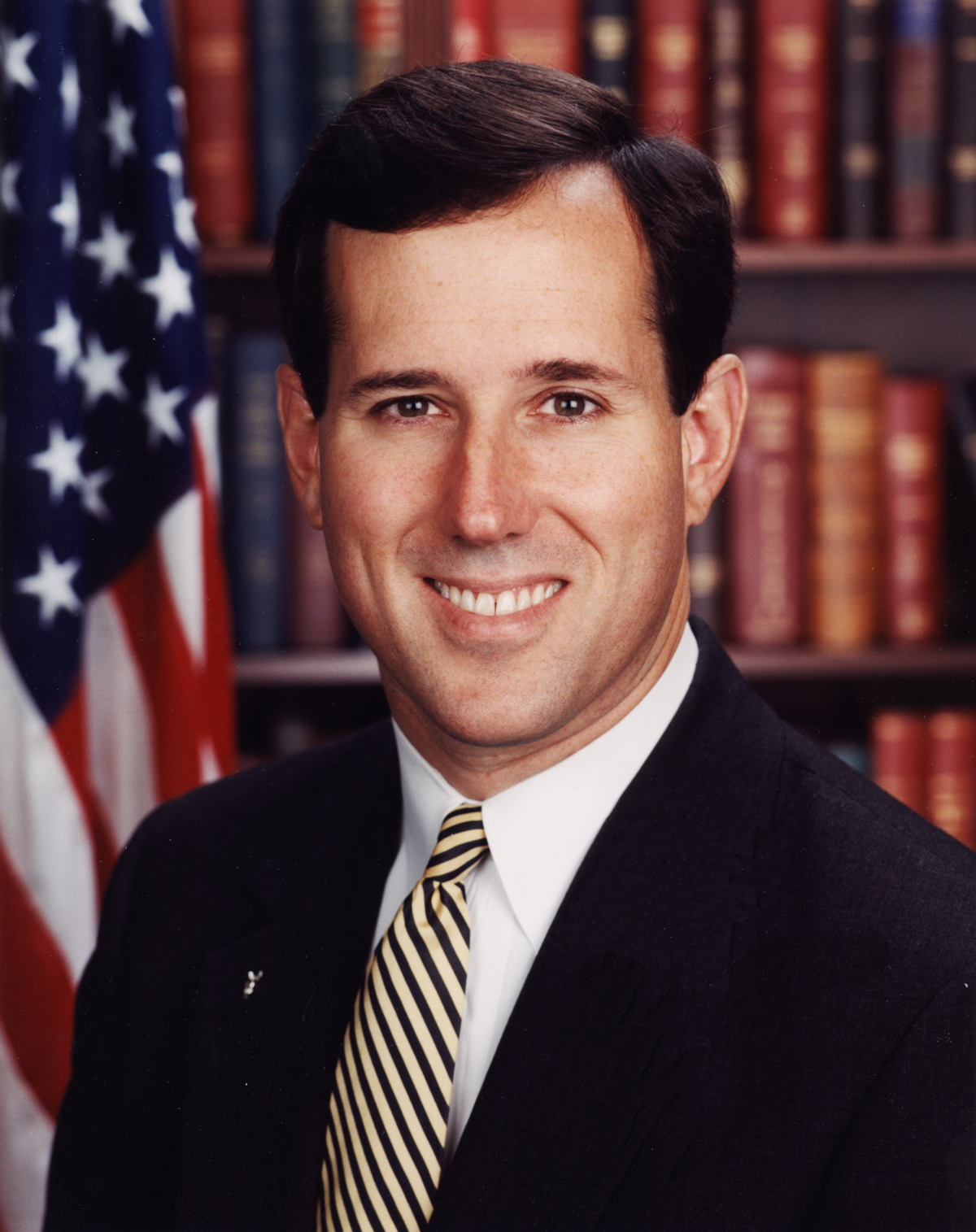
Now it's true that no one in the Wildrose caucus has been as straightforward as US Presidential candidate Rick Santorum (photo at right). In June 2011 Santorum stated that he would "fight very strongly against libertarian influence within the Republican party and the conservative movement." I highly doubt that MLAs Rob Anderson, Heather Forsyth, Paul Hinman, or Wildrose éminence grise Link Byfield would ever say such a thing, not least because of Byfield's view that fiscal and social conservatives need to cooperate in order to win elections. But that doesn't mean that advancing a libertarian agenda within Wildrose wouldn't be a Sisyphean task.

After the 2010 AGM I welcomed Chris Jones' becoming Edmonton director for the party, noting that Chris would be a good advocate for Edmonton on the provincial executive. Apparently, he was too good an advocate for views the party poohbahs aren't inclined to indulge since I've recently learned (not from Chris) that party HQ has stalled on Chris' application to run in Edmonton Millcreek. Evidently headquarters is too busy invoicing the constituency associations for money to be sent to party central. I have to shake my head at the complaint about Chris I heard in 2010 from someone drawing a full time salary from the party that the Edmonton volunteer was too controlling. Who is controlling who here?

Does Wildrose offer the fiscal conservatism libertarians would be interested in? When the party is promising more education spending etc it's doubtful whether the commitment is more than rhetorical. In today's Throne Speech, it seemed that Premier Redford might actually put some effort into honouring her leadership campaign pledge to only route the first $6 billion of natural resource revenue into current spending and have the remainder go into savings. Given that more than $8 billion of non-renewable resource revenue is being spent annually, this leaves a real gap that will have to be closed by either spending cuts or tax increases. Either route is going to be unpopular, and if Redford doesn't try to wriggle out of this one she deserves credit for following through on a deficit fighting promise.

The elephant in the room with regard to spending remains, as I've long argued, the public sector unions. A recent U of Calgary study noted that "since 2000, the province’s public sector wage bill has shot up by 119 percent — almost double the rate of growth in the rest of Canada." Futhermore,
In 2000-01 total provincial revenues were $25.5 billion. In 2010-11 revenues grew to $34.0 billion, an $8.5 billion dollar increase. [meanwhile...] we see an increase in wages of $8.1 billion. In other words, 95 percent of the increase in provincial revenues over the last decade has gone directly into the pockets of public sector employees. The total wage bill rose to nearly 45 percent of total expenditure in 2010 from just over a quarter in 2000.

This is what happens when the public sector unions have the whip hand. I continue to have little faith that the Wildrose party's current leadership has the stomach to take them on. The breaking point for me was when Wildrose Finance critic Rob Anderson claimed that he supported the right to a secret ballot for union certifications despite the fact that at the 2010 AGM, the "caucus" (read Anderson and Forsyth) wanted to delete the party plank calling for a secret ballot. No libertarian should tolerate this interference with the economic freedom of the individual. While Alberta politicians continue to universally avoid any direct criticism of either unions or the salaries and benefits going to front-line public servants, Iowa Governor Scott Walker has put his job on the line with respect to the issue.

Wednesday, January 18, 2012

the Wikipedia agenda: civil liberties at the expense of the facts

Having returned to North America from several months in China I can only shake my head at the intensity with which the Wikimedia Foundation (WMF) finds an enemy of freedom in... the United States Congress.

The US government has been an enormous friend of Wikimedia Commons. Last year the National Archives and Records Administration contributed over 100,000 historical photographs to the Commons. So why go after a legislative body that has historically passed legislation that has been such a great boon to the public domain?
The short answer is the WMF took its eye off the public domain ball. If the WMF could convince other governments around the world to adopt the US practice of deeming the work of government employees done in the course of their official duties public domain, it would have a huge impact on the amount of free content available on the Internet. For evidence that the WMF is just not interested, look no further than the fact that, instead of setting an example by having the work of WMF staff deemed public domain, it's deemed "all rights reserved".

Over at Wikimedia Commons I've argued on multiple occasions that although the standard uploading tools direct uploaders towards licenses that range from totally free (public domain) to mostly free, the philosophy of the Commons is undermined by evaders who create their own "custom" licenses in order to add additional restrictions or, at a minimum, add language that appears to discourage free re-use. With the WMF itself being one of the offenders here, my arguments have gotten little traction in discussions that are overwhelmingly dominated by content creators who have an incentive to protect author rights at the expense of users.

Is there any chance that the WMF might support a "Keep the Commons Free" effort in the future? At the moment they are not just distracted by their so-called "Keep the Internet Free" campaign but obsessed with it to the point that the rhetorical excess they have engaged in has created a climate of fear and hysteria about supposedly infringed civil liberties.

On January 18, the Commons ran a banner protesting the anti-piracy legislation. Is this going to encourage anyone in Hollywood to ever donate something to the Commons in the future? Wouldn't a boost to the Commons just create a bigger platform for future advertising against the content industry's interests?

Also on January 18, all editors were locked out of editing the English Wikipedia. Well, almost all. WMF staff reserved the right to keep editing, and did, in particular WMF Executive Director Sue Gardner. What did they edit? A page the WMF took exclusive ownership of, with no opportunity for community collaboration in its development, and, more importantly, no presentation of dissenting views. How did they edit? In violation of community developed policies that included:
- claim after claim, such as "as around the world, we're seeing the development of legislation that prioritizes overly-broad copyright enforcement laws, laws promoted by power players, over the preservation of individual civil liberties" is made with out a single footnote in the whole screed
- In the policy it says "Wikipedia should not offer first-hand news reports on breaking stories." Sue Gardner took it upon herself to advise her captive readers that "As of [update time here] PT, January 18, Google [News] has more than 4,600 articles about the blackout. Here are a few: ...."
- I couldn't help but notice the outrage some commentators on other websites directed at those who suggested ways of getting around the WMF-enforced January 18 censorship. No irony here if one is able to fully appreciate the "we had to destroy the village in order to save it" mentality, I suppose.
- "NPOV is a fundamental principle of Wikipedia and of other Wikimedia projects. This policy is non-negotiable and all editors and articles must follow it," says the policy. We now know that there's an exception for "Wikimedia projects" that politick for "individual civil liberties" and editors with Wikimedia Foundation logins (which are only granted by the WMF). On the blackout page that the WMF monopolized Sue Gardner directed traffic towards the website of the civil liberties advocacy group the Electronic Frontier Foundation (EFF). Who sits on the WMF's Advisory Board? A former founder and chair of the EFF. Former WMF general counsel Mike Godwin used to be an EFF lawyer.
- We're told that "Wikipedians have chosen to black out..." On what basis? A poll, and a poll of a small fraction of Wikipedians. The WMF tells us that "We are doing this for you" but "you", the non-Wikipedian reader, was never asked what you wanted. According to policy, "Elections and votes are only endorsed for things that take place outside Wikipedia proper" yet this "thing" most decidedly occurred ON Wikipedia. The WMF initiated a raw vote (in contrast with the more sophisticated preference rank sorting that personnel elections use) where ultimately the votes of apparent single purpose accounts counted for the same as that of veteran editors. When some editors attempted to steer the proceedings into more of a discussion, a WMF staffer shoved these efforts off into the obscurity of the poll's "Talk" page. That this Talk page was not considered relevant to the "community decision" as far as the WMF was concerned was further evidenced by the fact that the WMF blocked it on January 18 but did not block the poll page.

If Wikipedians have "chosen to black out" a global service and go to war with "Big media" it may be said Americans chose to invade Iraq in 2003. An ABC News/Washington Post poll taken shortly after the beginning of the Iraq war showed 62% support, higher support than for the global blackout of English Wikipedia (which was actually in the minority primarily because so many called for a US-only blackout). The fact of the matter is that the invasion of Iraq was not the culmination of a bottom-up grassroots movement. Likewise, the Wikipedia blackout was the brainchild of Jimmy Wales and the WMF. The editing community went along with it, in large part because they placed their trust in what they were being told.

The truth about SOPA/PIPA

What were they being told? That there was an existential threat to Wikipedia. Wikimedia general counsel Geoffrey Brigham did not mislead the Wikipedia community by painting a demonstrably false picture so much as by painting with strokes that went one way when it served the WMF's desire to politically mobilize the community and with strokes that went the other way when it didn't, such the picture that resulted was misleading and incomplete. He (and many other Silicon Valley-based activists) stretched the language of SOPA/PIPA to the breaking point in terms of breadth of interpretation, while simultaneously interpreting the language of the IRS' prohibitions against non-profit lobbying down to its narrowest. Had an advocate of equal standing been invited to present an alternative view to the Wikipedia community, there would, of course, have been far less reason for concern. Readers could have been pointed to Creative America's "Fact vs Fiction" with respect to the some of the provisions, to take but one example, and invited to draw their own conclusions. Instead, we get Brigham issuing a "call to action" that included directing readers to the virulently anti-Republican website Daily Kos (with DKos in turn directing its readers towards Jimmy Wales' poll). Brigham is also directing Foundation funds towards Washington lobbyists who are registered to lobby not only on "Copyright/Patent/Trademark" which is arguably related to public domain issues (I say arguably because, as I noted at the beginning of this post, there is a lot more that could be done to encourage content owners to voluntarily license their work for re-use as opposed to lobbying for the denial of legal remedies with the result that content owners are forced to allow re-use), but extends to "Civil Rights/Civil Liberties," which has no necessary connection to the definition of the public domain.

Partway throught the blackout Sue Gardner noted on the "Learn More" page (that the blackout page linked to) that the blackout page had received 90 million views and that there were more than a quarter million tweets an hour about #sopa. And just what was being tweeted? "If SOPA passes, there will be no more YouTube, Twitter, Google, Wikipedia, Facebook and many more sites you love to use!" or something similar. What happens when a lie is literally repeated more than a million times? Wikipedia, the information storehouse, played critical enabler to this massive misinformation campaign. According to Gardner, "in its current form, SOPA would require Wikipedia to actively monitor every site we link to, to ensure it doesn't host infringing content." Gardner's claim doesn't rise to the level of hysterical falsehood that the tweets rose to, but it's still highly dubious. If passed, these bills would require the search engines to put in some of the effort that Wikipedia currently puts in into avoiding links to sites dedicated to copyright infringement. Wikipedia is not a search engine and even if it was, the effort that is put in on Wikipedia to help protect copyright is more than enough to preclude Wikipedia ever running afoul of this proposed legislation. The only way Brigham was able to manufacture a threat to Wikipedia was by denying that these efforts exist, claiming that linking to the Pirate Bay is a "totally legitimate link" on Wikipedia.

This is not the case. WP:ELNEVER says that "editors are restricted from linking to the following, without exception: Material that violates the copyrights of others..." adding that "Knowingly directing others to material that violates copyright may be considered contributory copyright infringement.... Linking to a page that illegally distributes someone else's work casts a bad light on Wikipedia and its editors." Wikipedia's external links policy goes on identify "content that is illegal to access in the state of Florida (since Wikipedia's servers are located there)." If your internal constraint is to follow the external constraints imposed by the United States government, by definition the government would not be imposing any incremental coercion. The immediate response to this last point, of course, is that Wikipedians have absolute standards. To this I'd make two observations: 1) This is a moral argument, not a legal one, such that Brigham's legal opinion should be downweighted to that of the rest of us 2) Where were these absolute standards before? "Fair use" images are not hosted on the Commons, but they are on English Wikipedia. Why? Because most non-US jurisdictions are more restrictive about "fair use." Where is the protest to shut down various Wikipedias until foreign governments liberalize fair use? This has a direct and indisputable impact on the content of these non-English Wikipedias, yet they have apparently just passively accepted their legal environments.

The Left Coast Agenda

The obvious explanation for this anomaly is that the WMF has a US-centric view. Jimmy Wales insists that the anti-piracy laws would set a "precedent" for censorship yet the Attorney General can already order U.S. Internet service providers to block access to child pornography. As the Boston Herald notes, "thank goodness, Google and Wikipedia have thus far raised no objection [to that]. This week Jimbo told CNN that "this law... at least the Senate version, would include the creation of a DNS (domain name system) blocking regime that's technically identical to the one that's used by China. " First of all, besides the fact that the House dropped DNS blocking from its bill and the Senate bill will eventually have to be rendered compatible the House's bill, the Senate bill's sponsor indicated prior to Jimbo making his charge that he's prepared to drop it, saying "I regret that law enforcement will not have this remedy available to it..." When somebody is waving the white flag in my view the proper course of action is to hold fire and discuss surrender terms. Secondly, see this editorial from December 29 on the DNS issue, which I need not repeat here. Thirdly, while the rest of Wales' claim here is technically true, it doesn't have what I'd call truth value, truth value being that it would support the point trying to be made if all the facts were out there. I walk on two legs. So do the Chinese! Does anything sinister follow from that? For Wales to have an argument it would have to be the case that DNS blocking is somehow exclusive to authoritarian regimes. In fact, the Netherlands, Austria, Belgium, Denmark, Finland and South Korea all engage in DNS blocking. Where was Jimbo and the rest of the WMF earlier this month when two Dutch ISPs were ordered to block access to the Pirate Bay? Out organizing Dutch Wikipedians in order to protect their right to link? Correct me I'm wrong, but the WMF didn't so much as even put out a token press release. Did you know the dastardly Danes censor or ban over 3,500 sites? I do, but no thanks to any WMF awareness raising effort. Where was the WMF when the Sydney Morning Herald reported in late 2010 that Australia's list of blacklisted sites could increase from 1,370 to around 10,000 sites? Or when the "Australian communications regulator [] issued a stark warning that websites who link out to 'banned' hyperlinks are liable to fines of up to Aus $11,000 a day." Why hasn't the WMF complained about Wikipedia's blacklists in the name of free information, e.g. from a unanimous ArbCom decision dated 20 October 2006: "A website that engages in the practice of publishing private information concerning the identities of Wikipedia participants will be regarded as an attack site whose pages should not be linked to from Wikipedia pages under any circumstances"? Is this not censorship?

Answer: in San Francisco. As the Financial Post has reported, after former CBC documentary producer Sue Gardner became Executive Director of the WMF, Wikimedia moved to the west coast "where it would be in close proximity to the bright minds -- and big wallets -- of Silicon Valley." Today, of course, the WMF is furiously denying that these "big wallets" have anything to do with anything. Today CBS News reported that "behind the protests and public posturing, both Hollywood and Silicon Valley spend generously to lobby causes in Washington. According to the Center for Responsive Politics, the movie, television and music industries spent a combined $91.7 million on lobbying efforts in 2011, compared with the computer and Internet industry's $93 million." One of the Q and As the WMF put up on the "Learn More" page that got millions of views today was "I keep hearing that this is a fight between Hollywood and Silicon Valley. Is that true?" "No," we are told. Don't trust these mainstream media reports. We're Wikipedia and we're on the side of the angels! Never mind that there's no citation for this claim. Trust us! It's the little guy vs the Corporate Agenda; that we happen to be pushing Google's interests is irrelevant, as is the fact Google's founder bankrolls the WMF. What's particularly dodgy about this monied interests line is the fact that it would have cost an enormous amount had this colossal PR exercise been paid for by anti-SOPA advocates at market rates. That market value was created by the cumulative, collective effort of an enormous number of editors over several years, a small fraction of whom then decided to follow the WMF and take Wikipedia away from editors like me to use as they saw fit.

The Financial Post story goes on to note that "to many outsiders" Gardner's mixing of fundraising efforts with selected editors and writers of Wikipedia could create dubious optics with regard to how independent Wikipedia's content is. Not a problem, in Gardner's view. Zack Exley, the longtime leftist activist and internet rabble rouser, has the file firmly in his non-partisan hands. Gardner recently cited Exley's activist history as a likely asset in the lead up to today's blackout. For her own part Gardner joined Occupy Wall Street in November and afterwards called on Wikimedia to "copy OWS tactics." In a blogpost she recommended that readers consult Feministing and The Nation, a self-described "flagship of the left."

Given this background, was there any way to stop the WMF initiated propaganda campaign that went down this week? The one opportunity I saw for something of a correction was ensuring some balance in Wikipedia's SOPA and PIPA articles. It was announced on Monday that these would remain unblocked. Concentrating on the PIPA article, I added some of the observations of people who were in a position to have an informed understanding of the bills. I noted that US Chamber of Commerce executive David Hirschmann, who is also President of the Global Intellectual Property Center, said the talk of freedoms and censorship "has nothing to do with the substance of the bills." I added the fact that a 2009 paper by the Information Technology and Innovation Foundation (ITIF) titled "Steal These Policies" formed the basis of the current anti-piracy bills. What I didn't make entirely explicit but independent readers should know is the fact that ITIF is largely funded by Silicon Valley, not Hollywood. I added ITIF fellow Robert Bennett's observation that "[t]he critics either don't understand what the bills do or are misrepresenting what the bills do. There's sort of a hysterical climate of criticism where people are objecting to something the bills don't do and are promoting noble causes like free speech and democracy but there is not much connection between what they are complaining about and what's in the legislation."

There was, of course, still a lot of material from expert sources that were out there that I didn't have time to add before the blackout. For example, Hillel I. Parness, an intellectual property lawyer who also teaches at Columbia's School of Law, looked at SOPA/PIPA back in November and concluded that the US government could not take down a website unless it demonstrated, to a judge, that the intention of the allegedly rogue site was to "willfully" violate one or more specific instances of copyright. Parness has also debunked the notion that the government could "go after YouTube" (even though Google's internal documentation once identified Youtube as "completely sustained by pirated content" and a "rogue enabler of content theft"). On top of this, of course, is the fact that since Parness' review the DNS blocking provisions have become all but defunct.

Parness points out that the legislation proposed here does not break new ground,"Therefore, if there was a risk of abuse, that risk has always been there. And I have confidence in the structure of our court system, that the prosecutors and the courts are held to certain standards that should not allow a statute such as this to be manipulated..."

A question I ask of Wikipedians who want to use Wikipedia for political lobbying is why they have so little confidence in America's prosecutors and judges and so much confidence in the WMF. The WMF's spending has soared since 2007 and less than half of the current spending goes towards the Technology Group. According to Gardner, this blackout "open[s] the door for more advocacy."

If there is to be any pushback against the censorship hysteria that has been manufactured, it would likely come from mainstream media scrutiny, ie some of the same "power players" the WMF denounced today. Why? Because besides the fact the major papers are serious about fact checking, network TV in particular often invites two guests whereby viewers can get both sides of the story.

As one music industry spokesman said, "It’s a dangerous and troubling development when the platforms that serve as gateways to information intentionally skew the facts to incite their users and arm them with misinformation." Just because I entirely agree does not mean I'm in Hollywood's pocket.

UPDATE (January 19):

I asked Sue Gardner, Zack Exley, and Geoff Brigham if they had any corrections to this account. Mr Brigham objected to some quotes, insisting he was "joking." I accordingly removed the quotes as I had not presented them as jokes.

I've asked Mr Brigham if he sees any possibility that the IRS, in reviewing the WMF's tax status, could consider the blackout to be an "in kind" contribution to the anti-SOPA lobby (ie assess the promotion at its fair value in the online advertising market).

Yesterday RIAA CEO Cary Sherman observed that "it's very difficult to counter the misinformation while the disseminators own the platform."

I tried, Mr Sherman. I really did. Even a fat cat executive like you doesn't deserve to be effectively censored. I followed Sue Gardner's editing of the message during the blackout, noting the changes by updating the history page. But I was locked out of editing as was everyone else who wasn't a WMF person.

She owned the platform and I didn't.

UPDATE (January 21):
See Nick Poole's remarks in this comment thread of a Wikipedia blogger.

UPDATE (February 7):
Bill Keller has written one of the most even-handed reviews of this issue that I've seen.