Wednesday, October 29, 2008

in Hong Kong

I'll be in Hong Kong for at least the next couple weeks, and will probably travel for a week or two in southwest China second half of November. I'm thinking of heading to Perth, Australia for the first week of December, and then spending the middle of December in Thailand or possibly returning to Vietnam, where I spent about 10 days last December. I may spend Christmas and New Year's in Singapore, travelling to India for a bit in late January. I might swing by the Phillippines in February, or maybe head to South America for a final couple months before "settling down". There's also some chance I might remain in Asia until to becomes warm enough to reasonably make a spring trip across Russia from the Pacific to the Atlantic.

That's all tentative, though. There are two elements to expanding one's consciousness, increasing the amount and variety of raw stimuli, and increasing the intensity and scope of one's deliberations upon that stimuli. The former is concrete and requires moving oneself to whatever the particularized experience is available. The latter is abstract and although theoretically doable anywhere, generally access to abstracted communication is necessary. That's a complicated way of saying there is a limit to how much I can learn and how educated I can be apart from access to the internet, western media, books, etc. Human knowledge and understanding is an extremely collaborative exercise; while some truths can and have been discovered quite independently, that rarely happens in the 21st century.

All this to say that while I feel my time travelling increases my awareness of the world, there are limits to that effect. As TS Eliot observed, "Shakespeare acquired more essential history from Plutarch than most men could from the whole British Museum." The point being that I could potentially be a more developed person by staying home with a quality book than by heading to, say, London, even with all that it offers culturally.

On that note, I may have a blog post or two over the next couple weeks while I'm here in Hong Kong and have internet access.

The real activity of life is the great activity of the developing consciousness, physical, mental, intuitional, religious — all-round consciousness. This is the real business of life, and is the great game of grown men. All that other affair, of work and money, should be settled and subordinated to this, the great game of real living, of developing ourselves physically, in subtlety of movement, and grace and beauty of bodily awareness, and of deepening and widening our whole consciousness, so that we really become men, instead of remaining the poor, cramped, limited slaves we are.

- DH Lawrence, Letter to Charles Wilson, 28 Dec 1928

Wednesday, October 8, 2008

in Africa

Apologies to all for no notice of the fact I have been travelling in southern Africa.

It has been a very concrete, physical experience: Kalahari sands too cold to walk 10 steps on at 3 AM, too hot to walk 5 steps on at 3 PM; spectacular sunrises and sunsets, moonrises as well; getting into sync with the cycles of the sun and the moon; enduring a series of days where it was 42 degrees in the shade, fresh water snorkeling in Lake Malawi, dealing with breakdowns, fascinating fellow travellers, etc.

I arrived in Mauritius on August 27 and Jo'burg on September 4. I'm currently in Malawi. Next up: Zambia, although that may be the end, with me flying back to Jo'burg from Lusaka on or about Oct 21. We'll see!

Sunday, August 24, 2008

the necessary enigma of Pat Buchanan

In a world where the cachet of "alternative" is largely reserved for the left, Pat Buchanan's boat rocking dissents are a welcome challenge to conventional wisdom from the right.

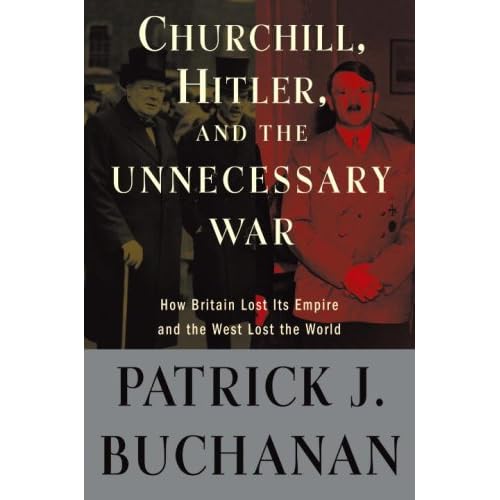
I'll confess that I haven't read Churchill, Hitler, and "The Unnecessary War": How Britain Lost Its Empire and the West Lost the World. However, the appearance of this book should not be the least bit surprising to followers of Buchanan's thinking in recent years and his description of the world wars as a "Civil War of the West". Paleo-conservatism is not politically viable today next to the alternatives of left-liberalism and neo-conservatism and that is largely because elements of paleo-conservatism reject the universalization of identity in favour of a particularistic "blood and the soil" narrative and that sort of thinking is seen in many corners as the intellectual root to the horrific excesses of Nazism. Buchanan's anxiety over immigration was the accepted wisdom prior to World War II, yet after it became a political third rail. It's only natural that Buchanan is going to lament the event that empowered cultural relativism and pushed his identity politics to the fringe.

Christopher Hitchens' critique of the book, and his conclusion that it not only "stinks" but has "sinister" elements, is likely to be one of the most popular critiques. Whether it is truly a book review is an open question. Hitchens doesn't seem to object to the Buchanan's scholarship so much as to Buchanan's weltanschauung: e.g. "[a]s the book develops, Buchanan begins to unmask his true colors more and more." In many respects, this proves the point about paleo-conservatism's marginalization: one doesn't argue with it, it's assumptions are rather self-evidently evil such that one need only expose it.

Hitchens takes strong exception to Buchanan's contention that, as Hitchens puts it, "the Nazi decision to embark on a Holocaust of European Jewry was 'not a cause of the war but an awful consequence of the war.'" According to Hitchens, "This absolutely will not do." On this point, Hitchens' absolutism is quite out of place. Why? Because the greatest evil of war is the breakdown in the norms of human behaviour that come with it. The Anglo-French guarantee of the Polish corridor transformed a tragedy for Poland into a tragedy for all of Europe. Now, perhaps it was a necessary tragedy. But that's an intricate hypothetical involving an enormous amount of abstraction about the "greater good" when the practical consequence of western efforts to weaken Hitler's hand would merely be to strengthen Stalin's unless the west could project its own power into the area (eastern Europe) in such a way as to keep Stalin from filling the vacuum (as an aside, this is why I am more dubious about military intervention in Iraq or Afghanistan than in Georgia or North Korea: in the former cases you have Iran or some unsavoury local warlord ready to fill the power vacuum, in the latter you've got the relatively respectable governments in Tbilisi and Seoul). Indeed, Buchanan's central contribution here is his review of the particular facts that illustrate how the non-self-interested "what brings a greater good for eastern Europeans" argument was not only dubious but was not even a significant consideration at the time. The historical evidence indicates that Hitler was interested in a war with the East, not the West. Atrocities are committed during times of war that are not committed to anything approaching the same extent when the legitimacy or reach of state authority is not under such direct and significant challenge. The scale of the crimes of peacetime Nazi Germany and wartime Nazi Germany are not comparable. Hitchens contends that it is "fatuous" to suppose that, without the "occasion" of the Second World War, "the Nazis would not have found another" occasion for "the organized deportation and slaughter of the Jews."

It is, in fact, quite the opposite of "fatuous". It is a question at the heart of a humanitarian, as opposed to ideological and impractical, anti-war policy. If one were to say, "it is outrageous to suggest that Germany's claim to the Polish corridor was so strong that Germany was justified starting World War II", one would be missing the point entirely. The point is that it is less than absolutely obvious that Germany's claim was so weak that expanding a German-Polish war into a war with the west would ultimately generate fewer horrors on net when a hulking Soviet Russia was right in the thick of it as well. Keep in mind here that eastern Europe was largely liberated from Moscow's communist authoritarianism in 1989 without the west firing a shot. The extent to which emancipatory effects actually follow from escalations of violence as opposed to heightened horrors is thus not a "fatuous" question.

Central to Hitchens thesis is the unelaborated assumption that the west was not facing a highly contentious "lesser of two evils" scenario with respect to Hitler vs Stalin. As a former Trotskyite, it is not surprising where Hitchens' sympathies lie. According to Hitchens, in the wake of 1945, "all the way from Portugal to the Urals, the principle of human rights" are the norm. "Human rights" were the "norm" "all the way ... to the Urals" in 1950? Hitchens doesn't say 1950, of course, he says, "today", but that makes the enormous assumption that whereas Soviet authoritarianism eroded over time, Nazi authoritarianism would not have. Look at the mentality of Germans today, and it is clear that the Germans are no more inherently racist, warmongering, authoritarian, or brutal than the Russians. The looting and expulsions that went on behind Russian lines in Georgia in 2008 have enough parallels to 1945 that it is, in fact, plausible to argue that the Russian mentality is more consistently resistent to western values than the German.

Unfortunately for my view of Buchanan, he undermines much of his own argument about how Churchill unwisely fueled the spiral of violence when Buchanan says, in reference to the contemporary conflict in Georgia, that "Georgia started this fight – Russia finished it. People who start wars don't get to decide how and when they end." Even if it is true that Georgia "started this fight", one could turn that around to say that since Germany started the fight in September 1939, any and all horrors subsequent, such as the Red Army's raping of literally millions of German women in 1945, should somehow be excused.

If humanity is going to step out of the shadow of hatred, we have to stop tying one instance of injustice to another and instead stand up and put a stop to the spiral. That doesn't mean arbitrarily choosing a point and saying, "no more from here", since that might just enshrine the outcome of the latest injustice. It means actually weighing the proportionality of each response and considering the particular messy details of the conflict.

Buchanan's column on Georgia isn't paleo-conservative, in my view, since it is chock full of the same supposed equivalencies trotted out by the left: Israel, Kosovo, etc etc. Paleo-conservatism, at its core, is particularistic, by which I mean it rejects the applicability of generalized abstractions, in particular the universal brotherhood of man. The fact I'm a male of northern European heritage, for example, says a great deal about me, and it isn't a moral statement but rather an insight. It's an explanation for why I think what I think and do what I do, not a justification. Buchanan gets away from this thesis when he assumes the relevance of a string of conflicts involving different cultures and conditions instead of considering what is unique to each particular case.

Saturday, August 23, 2008

Joe Biden

Joe Biden has said a lot of intelligent things when it comes to foreign policy and he would have been my top recommendation to Obama if Wes Clark was not going to be considered.

That said, Biden is not a centrist. Like Obama, he voted against John Roberts' Supreme Court nomination, despite the fact that if he had voted in favour, he would have been voting with the majority of Senate Democrats.

There's also the various problems chronicled in this New York Times article from twenty years ago.

In any case, it is the top of the ticket that matters far more, and on that count, if you've been following Greg Mankiw's blog, there is mounting concern over Obama-nomics.

Russian media at work

Check out Google's cache of an Interfax wire dated August 5. Then click on what it is a cache of. Gone! Evidently, news of militants entering what Russia officially considers Georgian territory on August 5 (traveling from North Ossetia to South Ossetia) needed to be scrubbed, perhaps because it didn't fit well with the narrative that the Georgians "started" the war on August 7.

See also this New York Times story on how the Russian media presented the FOX News clip.

"On [Russian] TV there is hardly any free reporting -- instead you see a lot of very aggressive propaganda." So says Lev Gudkov, director of the Levada Center. Der Spiegel adds that Gudkov believes it is "reminiscent of the worst of times in the Soviet era."

On an unrelated note, the cultural differences between Georgia and Iraq are telling. Tbilisi's authority in Poti (a port I spent a few days in last October) is surely negligible when the city is under Russian control and road and rail links to the Georgian capital have been severed. But instead of reports of Georgians looting each other, we get reports of demonstrations against Russia.

Friday, August 22, 2008

Georgia's economy

Last year, the World Bank called Georgia the world's "top economic reformer".

Foreign Direct Investment was 19.8% of Georgian GDP in 2007 (the highest rate in the world according to Richard Holbrooke) compared with 13.9% in 2006. In terms of raw amounts, FDI doubled every year.

In just three years, Georgia rose from 122nd to 18th — ahead of Germany — in the World Bank's "Doing Business" survey.

GDP grew an astounding 12.4% in 2007, one of the fastest rates in the world.

Just last month, Roy Southworth, World Bank country director for Georgia, praised Saakashvili's government for promoting growth, reducing poverty and fighting corruption.

Sunday, August 17, 2008

BBC bias part III

In another Reynolds piece,

... the West needs to acknowledge that the Russians did have a case. It needs to explain why it helped Kosovo but questioned Russia's right to help South Ossetia

It has been explained! See Deutsche Welle's interview with legal experts and note the "Not Another Kosovo" section. See also the New York Times on the question of "Is This Different Than Kosovo?" and this Slate piece: South Ossetia Isn't Kosovo. Reynolds' journalism is misleading because it implies that material like this does not exist. Responsible journalism would acknowledge the offered explanations and then bat them down in a piece that is clearly labeled opinion or editorial. Bonus question for Reynolds: when Russia "helped" South Ossetia did it help the more than 15 thousand Georgians living in South Ossetia who were robbed and expelled as a consequence of the Russian "help" or do they not count?

Since I've titled this "BBC bias" instead of "Paul Reynolds bias", let's consider a BBC piece without an author byline. The "timeline" pulls a Georgian action on August 7 out of the sequence of events to mark its beginning, the day "Georgian forces launch a surprise attack".

"Surprise"! From out of the clear blue sky of peace and harmony "perfidious" Georgian aggression bursts forth! Yet Russia's Interfax news agency reported that on August 5 "Volunteers are arriving in South Ossetia to offer help in the event of Georgian aggression". You've got forces moving across the internationally recognized Russia/Georgia border and that's just ignored?

According to the UK Times,

[t]he US State Department’s internal timeline of the crisis pinpoints the explosion on August 1 of two roadside bombs, believed to have been planted by South Ossetian separatists sympathetic to Russia, as a decisive moment. Five Georgian policemen were injured, one severely. ... It now appears that August 1 was a well-prepared “provocation”...

And according to the New York Times,

Pentagon and military officials say Russia held a major ground exercise in July just north of Georgia’s border, called Caucasus 2008, that played out a chain of events like the one carried out over recent days.
'This exercise was exactly what they executed in Georgia just a few weeks later,' said Dale Herspring, an expert on Russian military affairs at Kansas State University. 'This exercise was a complete dress rehearsal.'

Perhaps someone will write "surprise" on a piece of paper and pin it next to Reynold's "evidence" on a bulletin board in the BBC editorial room under the title of "We Called It!".

Meanwhile, the UK Times reports what went on behind Russian lines, as does the Guardian.


UPDATE (August 24): A BBC Editor has apologized... for a "slip" whereby a "Russian invasion" was mentioned. There was no invasion. So very sorry. The Russian army ended up in Poti on the BBC's magic carpet ride, also known as a "humanitarian intervention". The there was no US-led "humanitarian intervention" in Iraq, however, the BBC can call an "invasion" when it sees one!